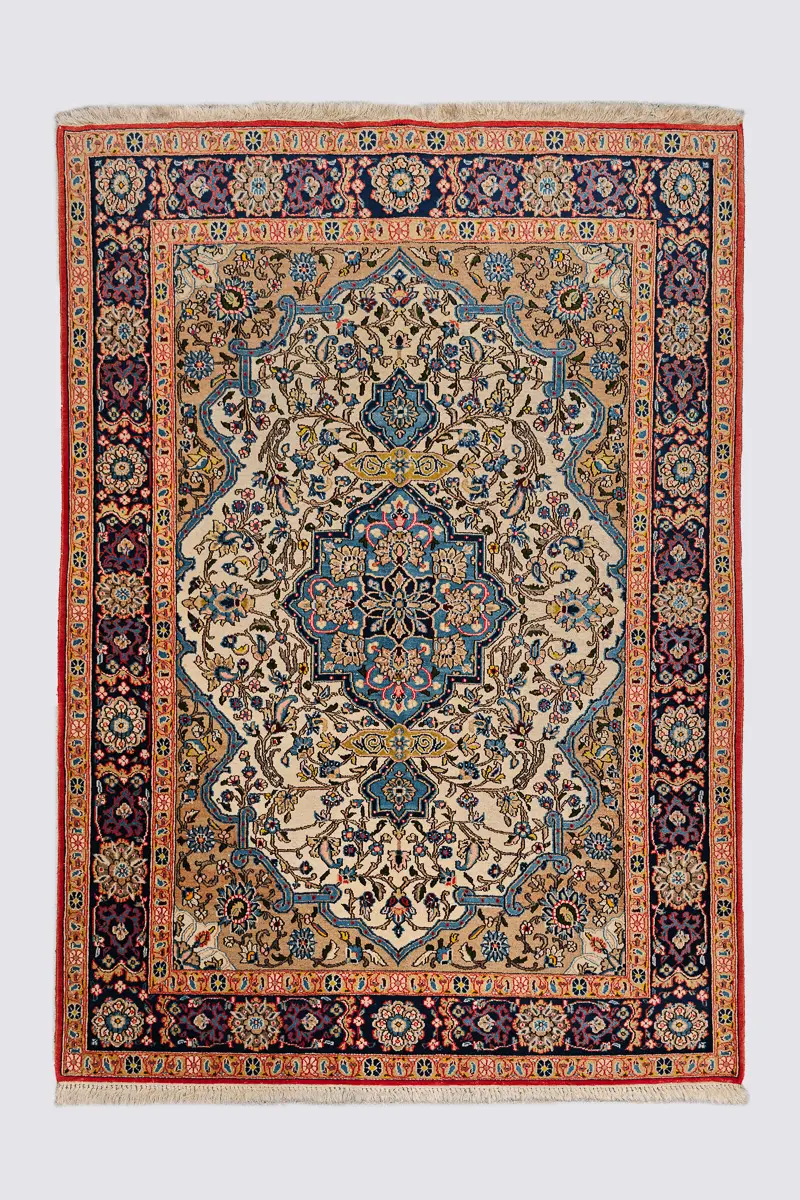
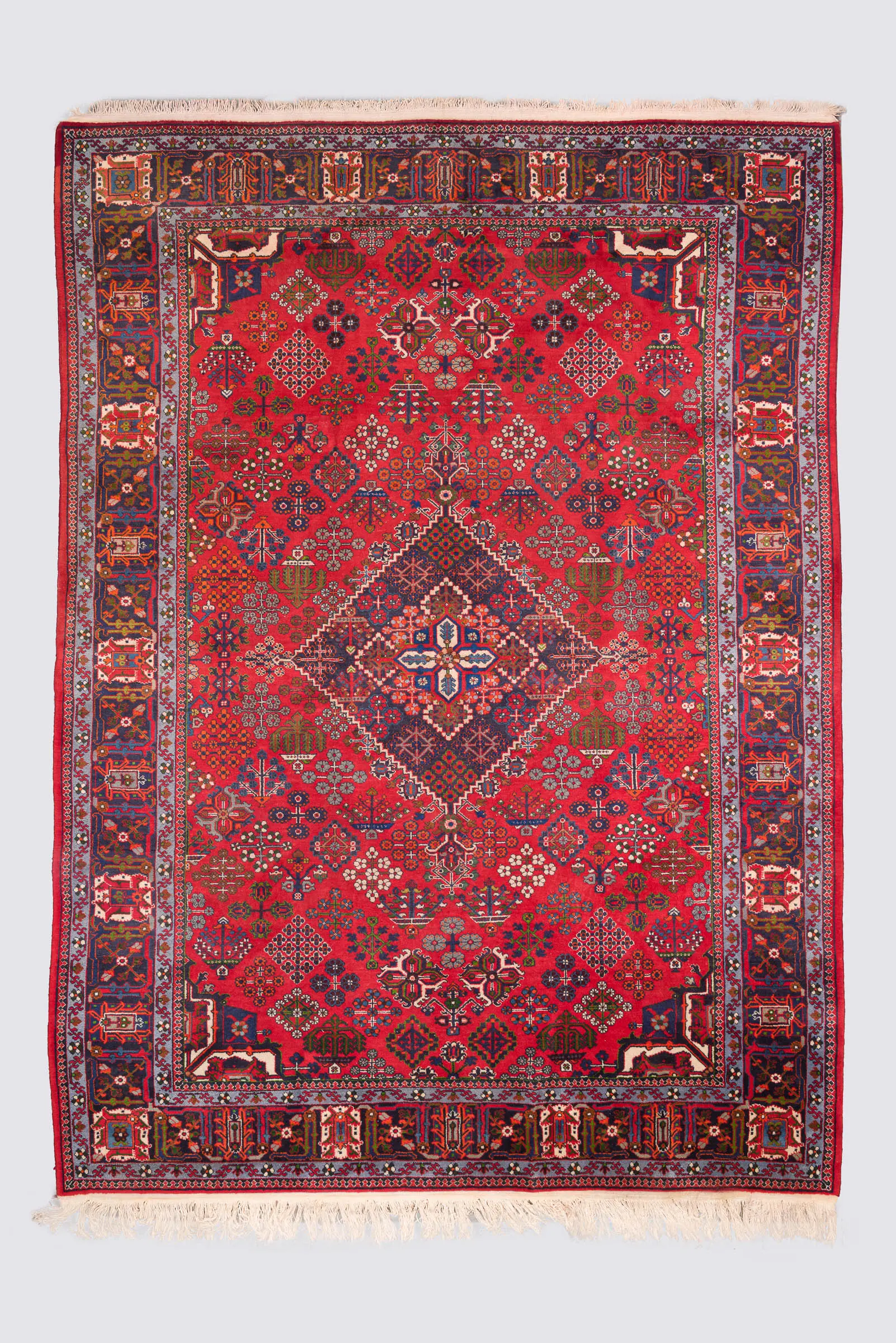
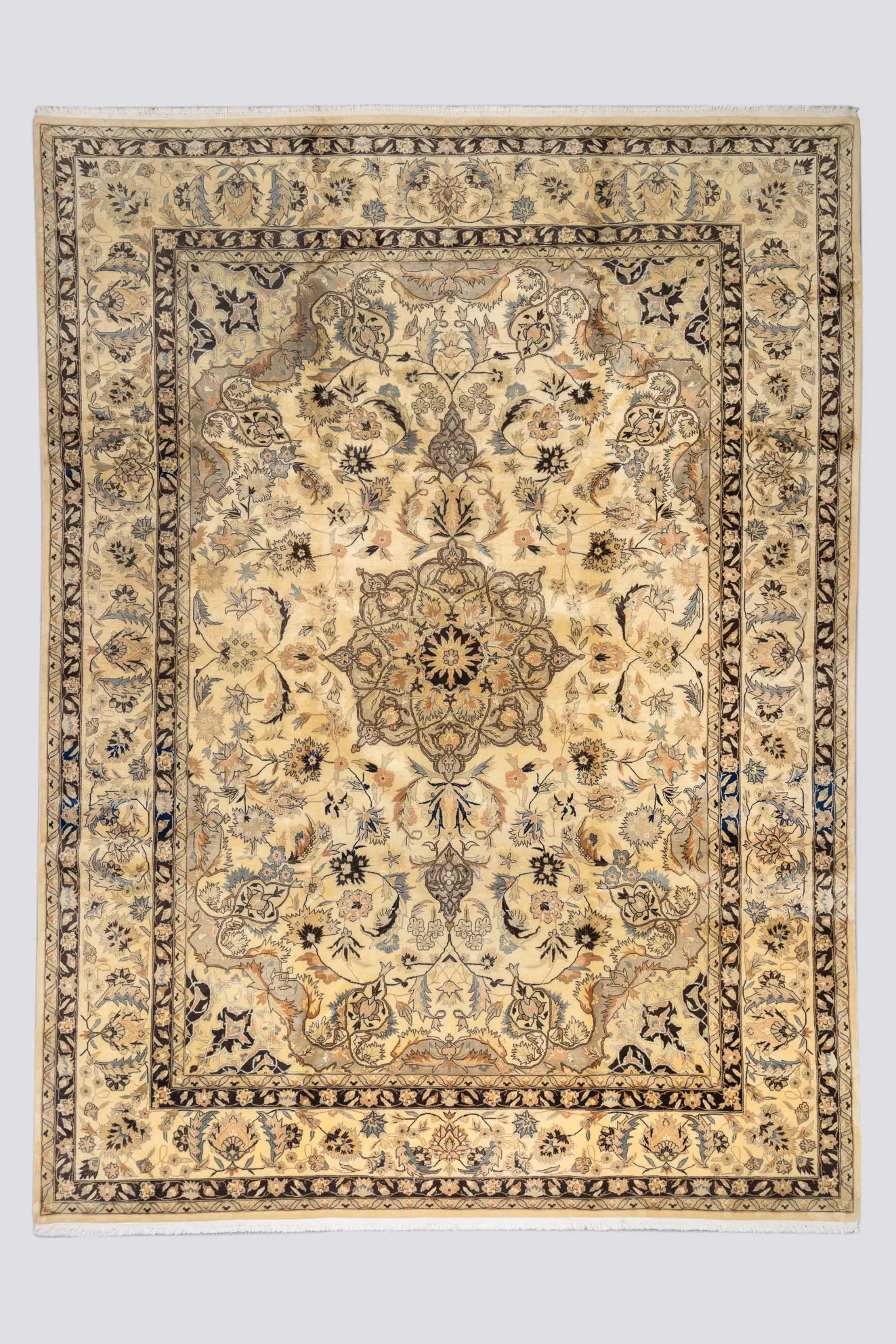
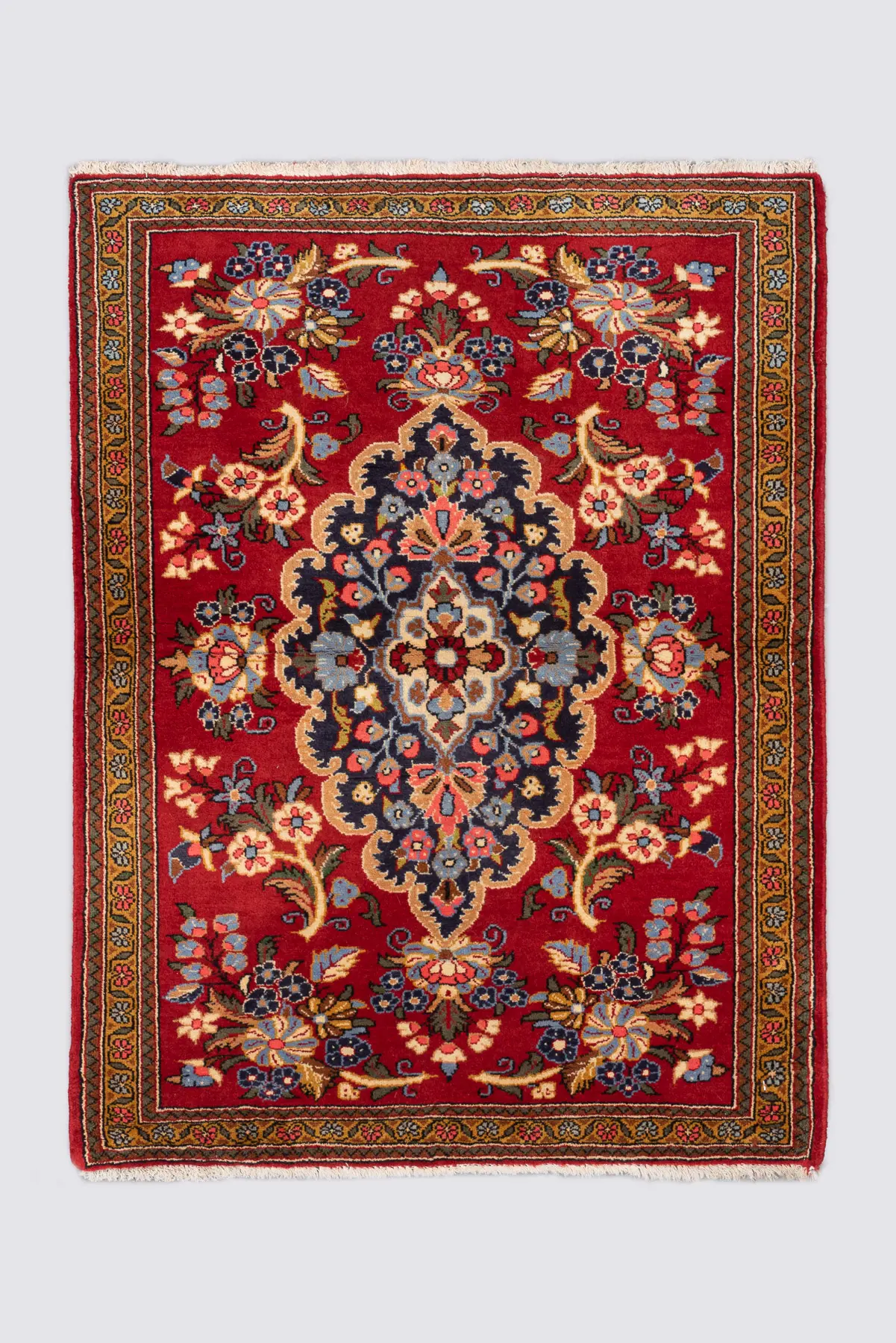
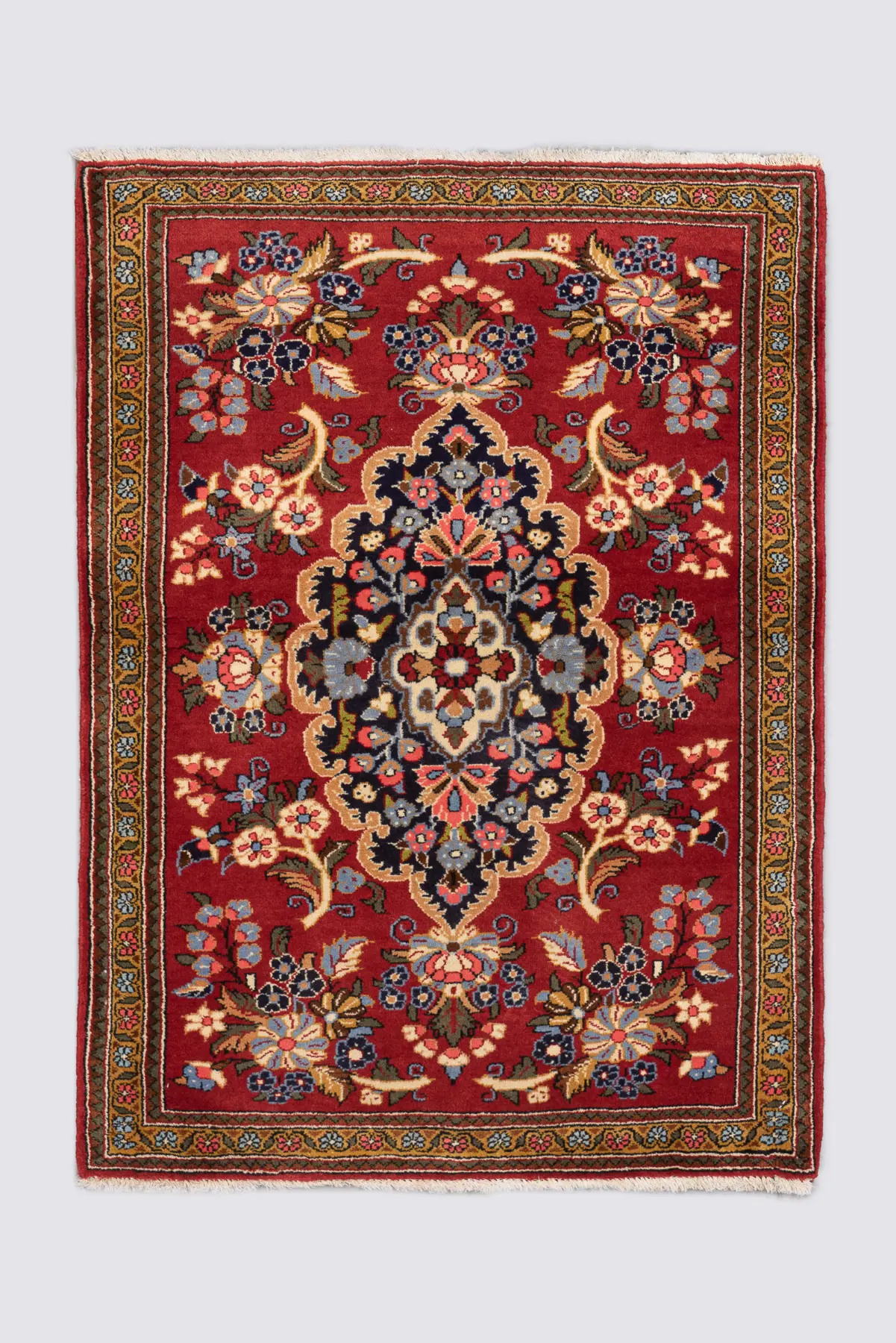
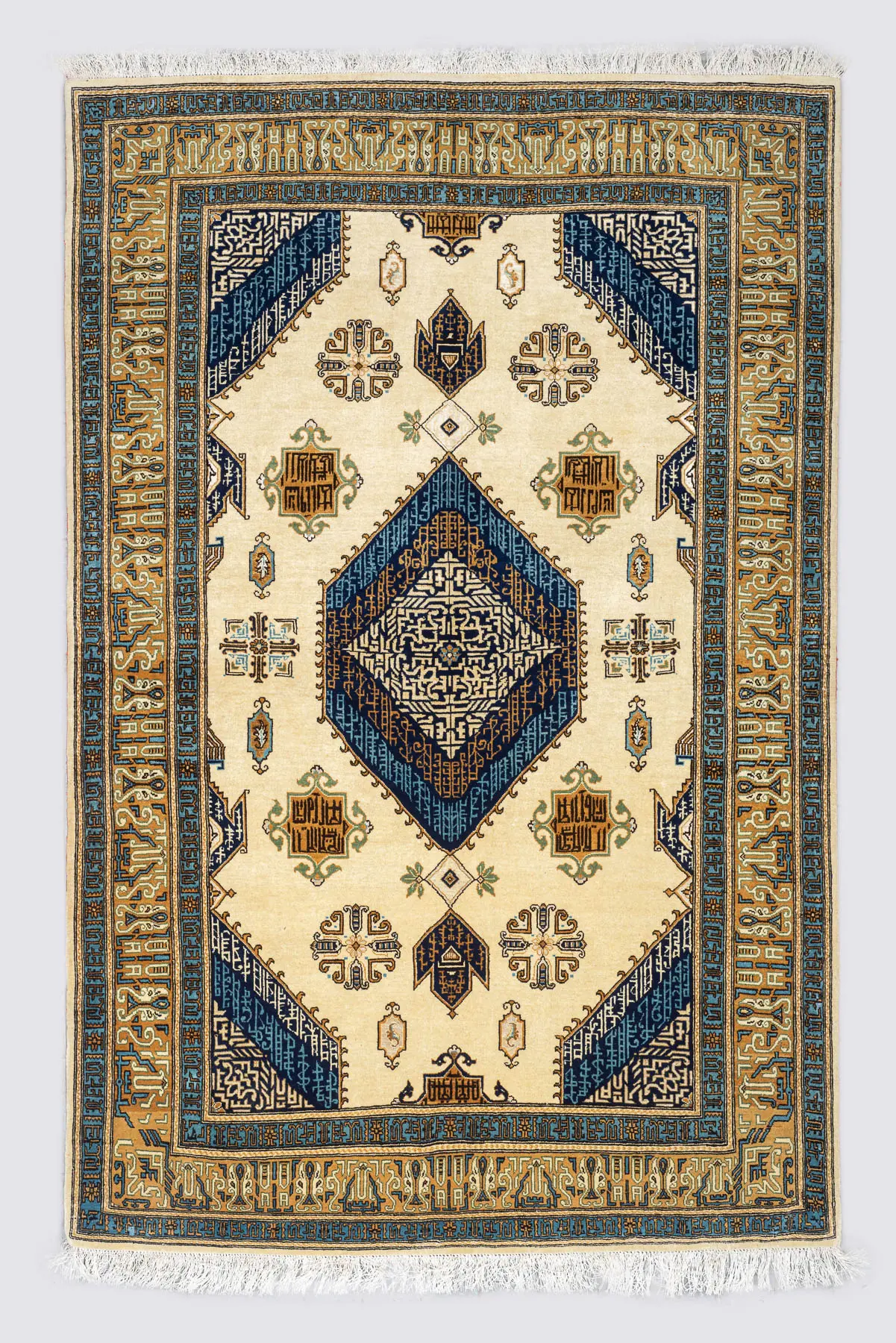
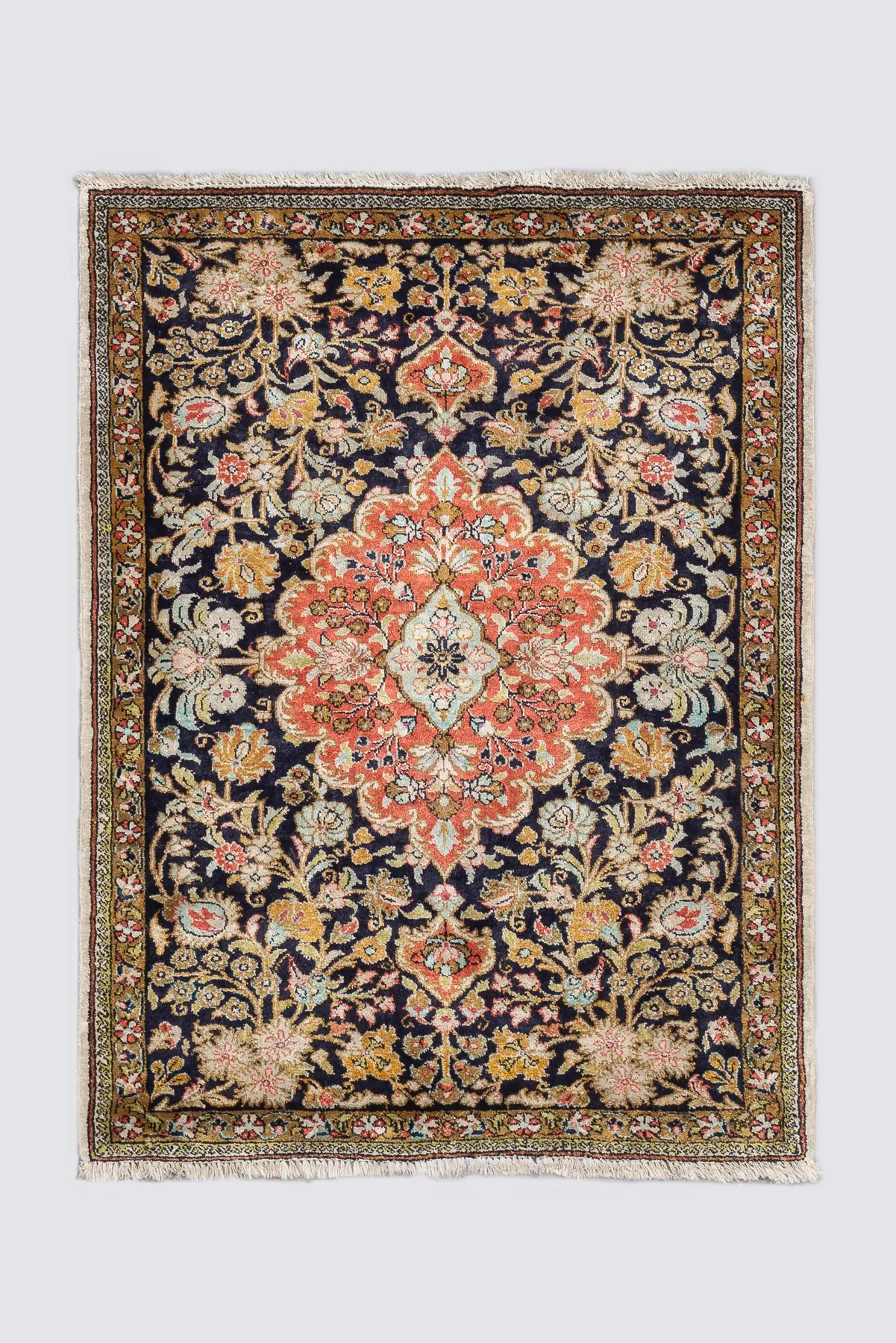
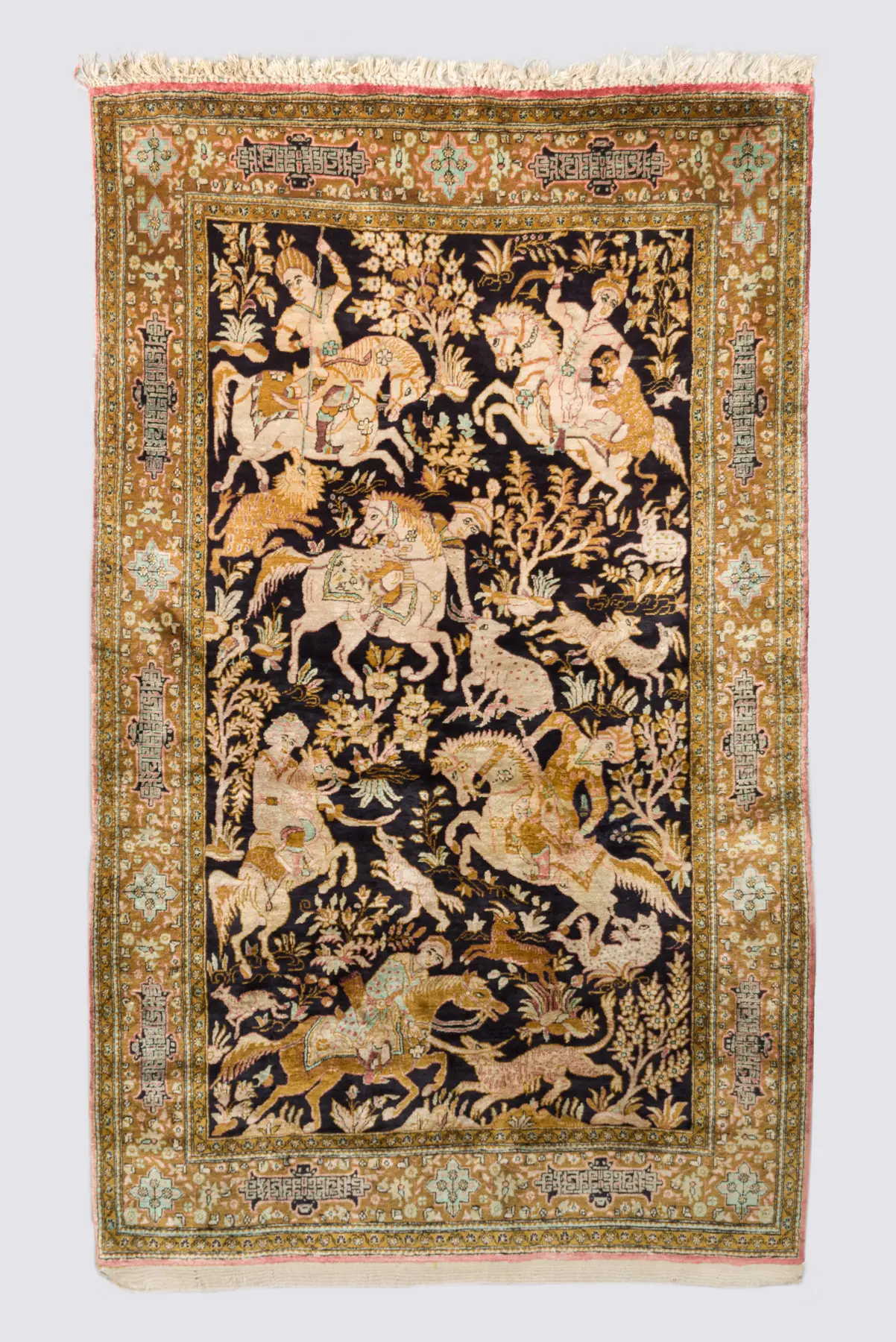
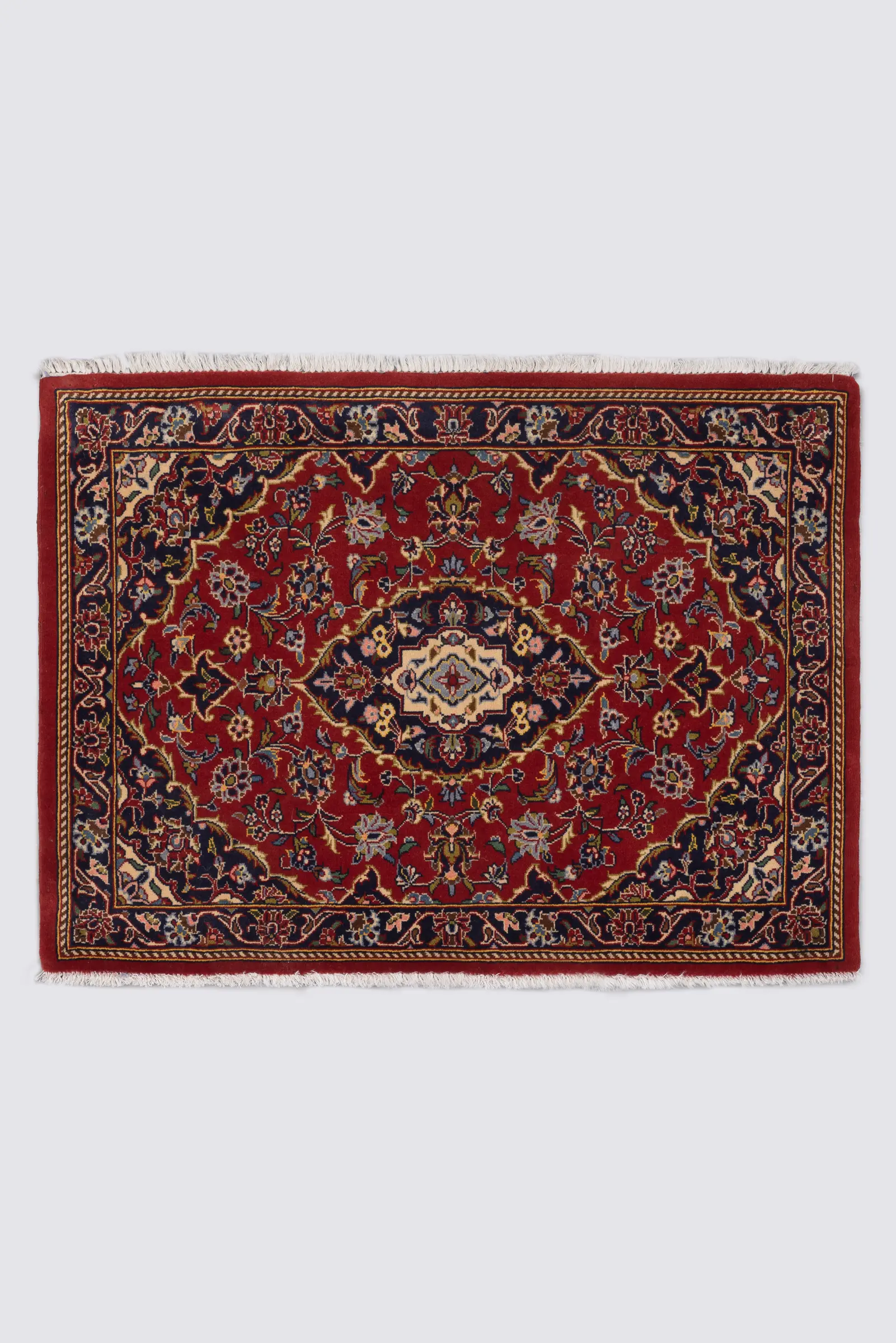
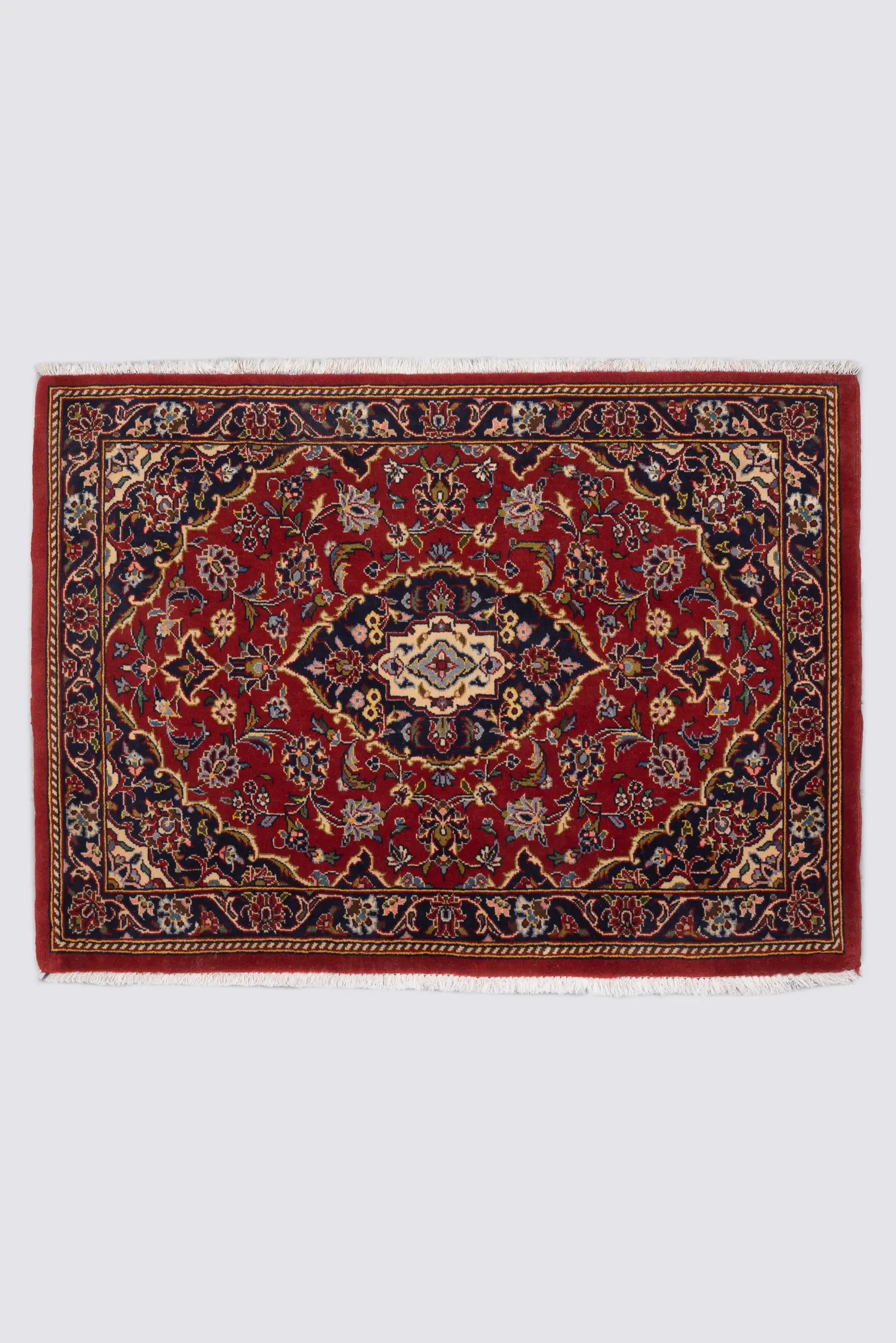
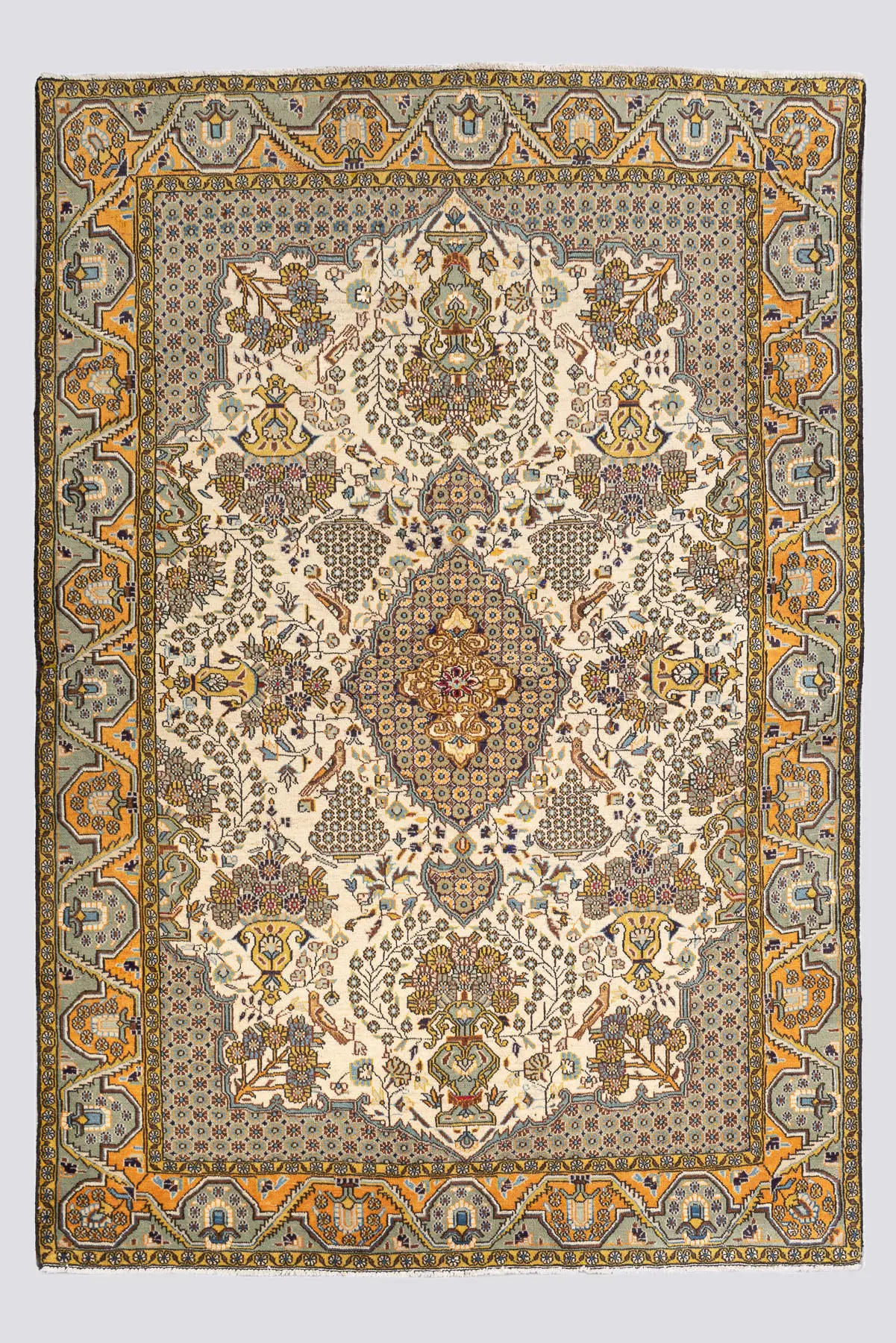
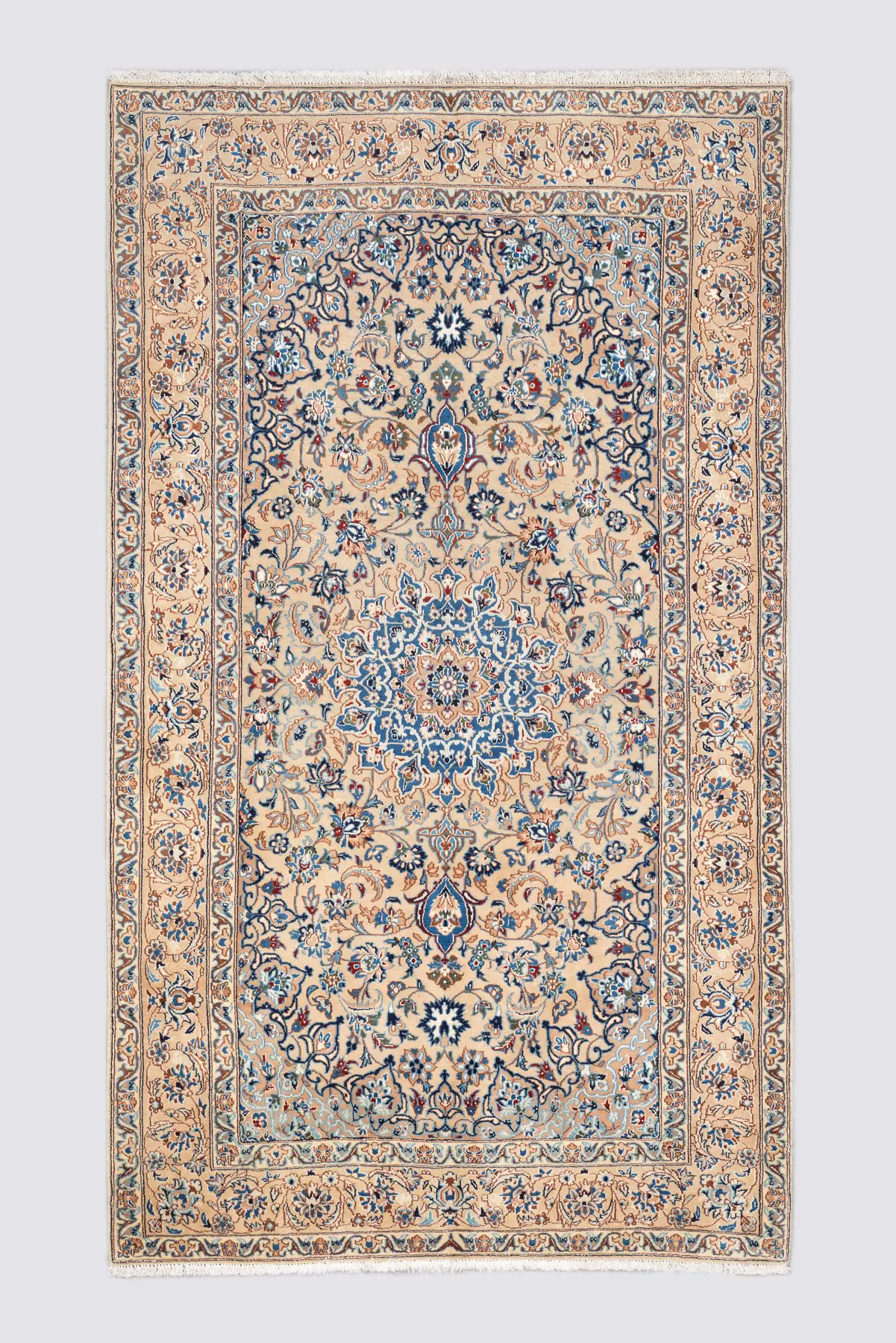
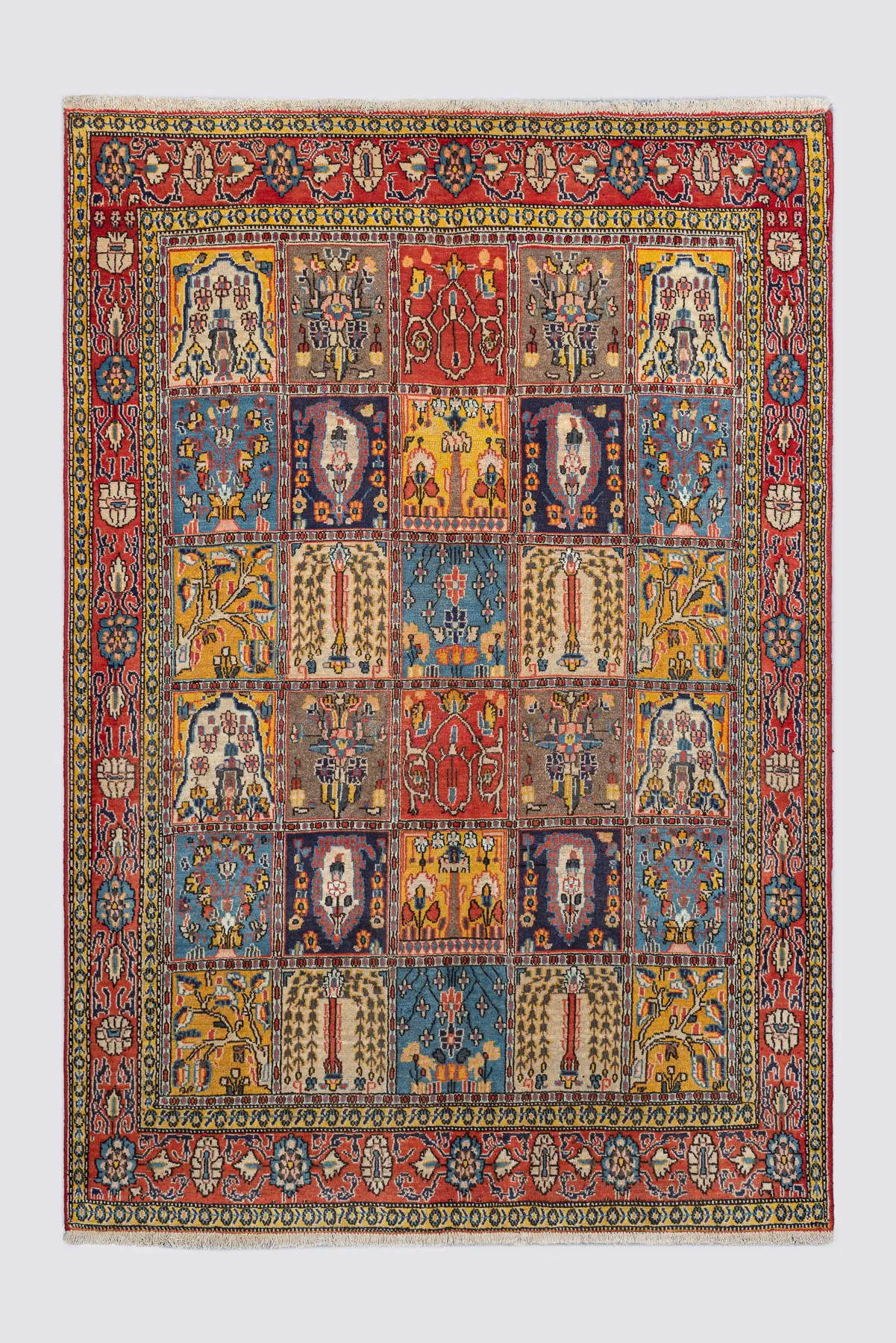
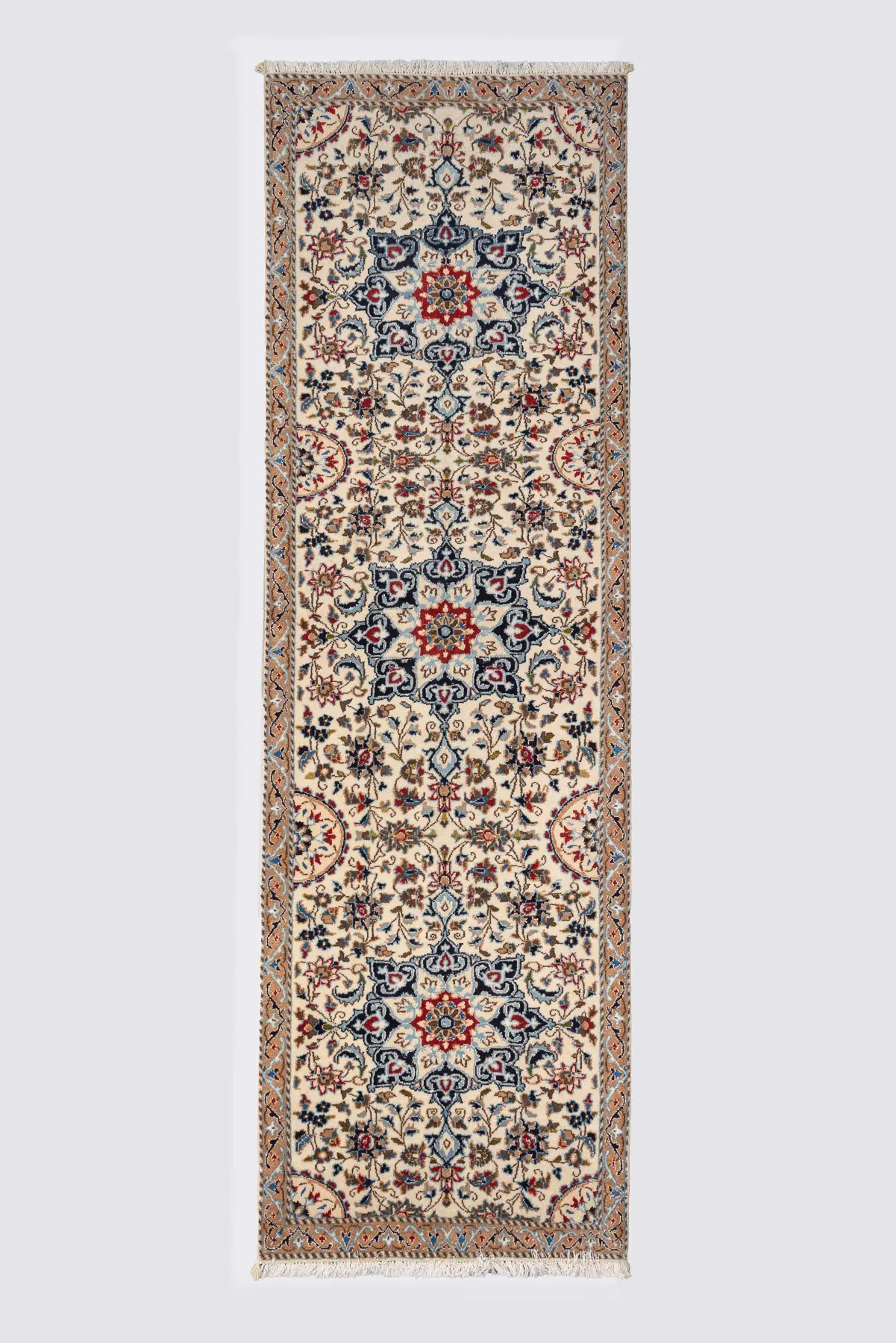
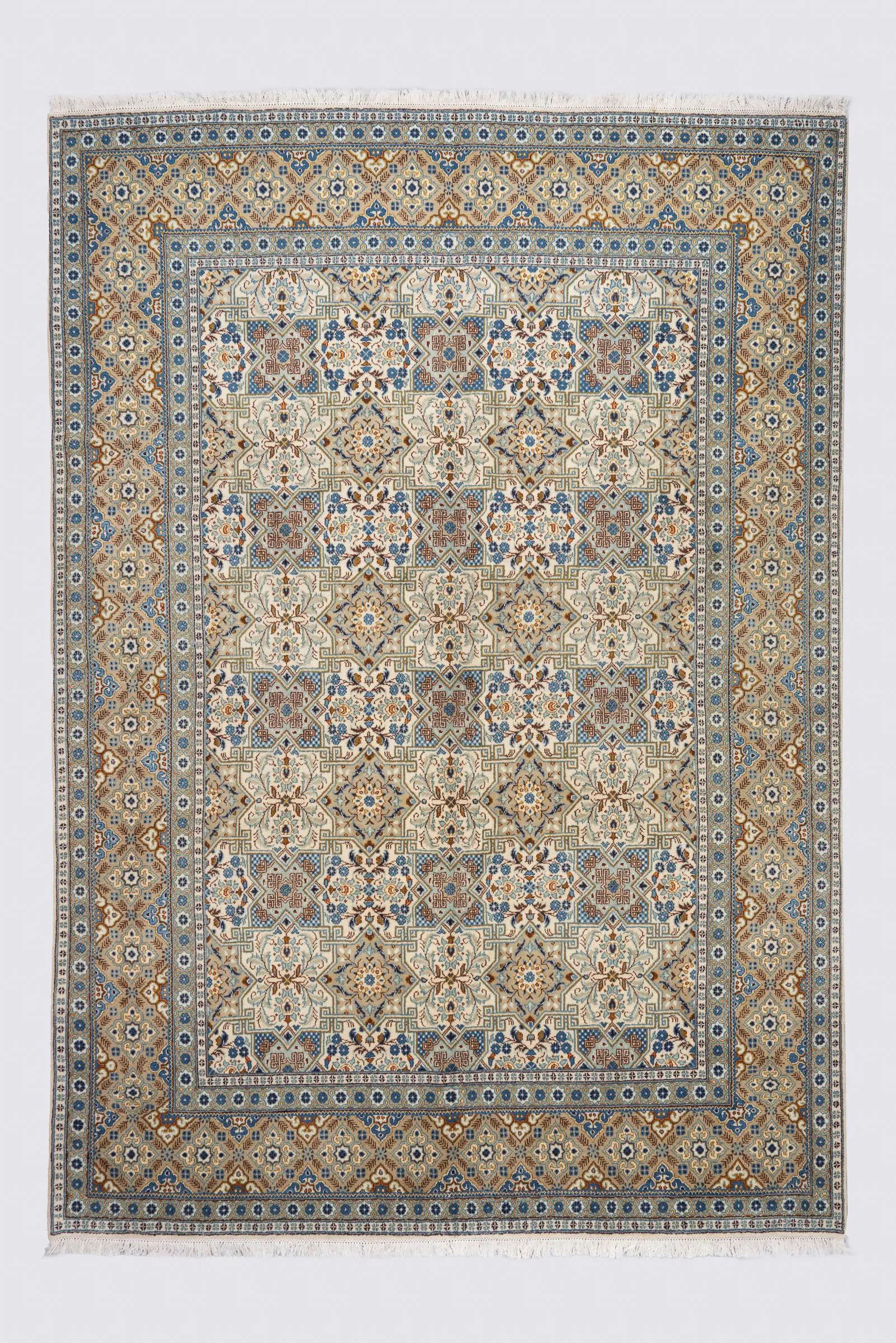
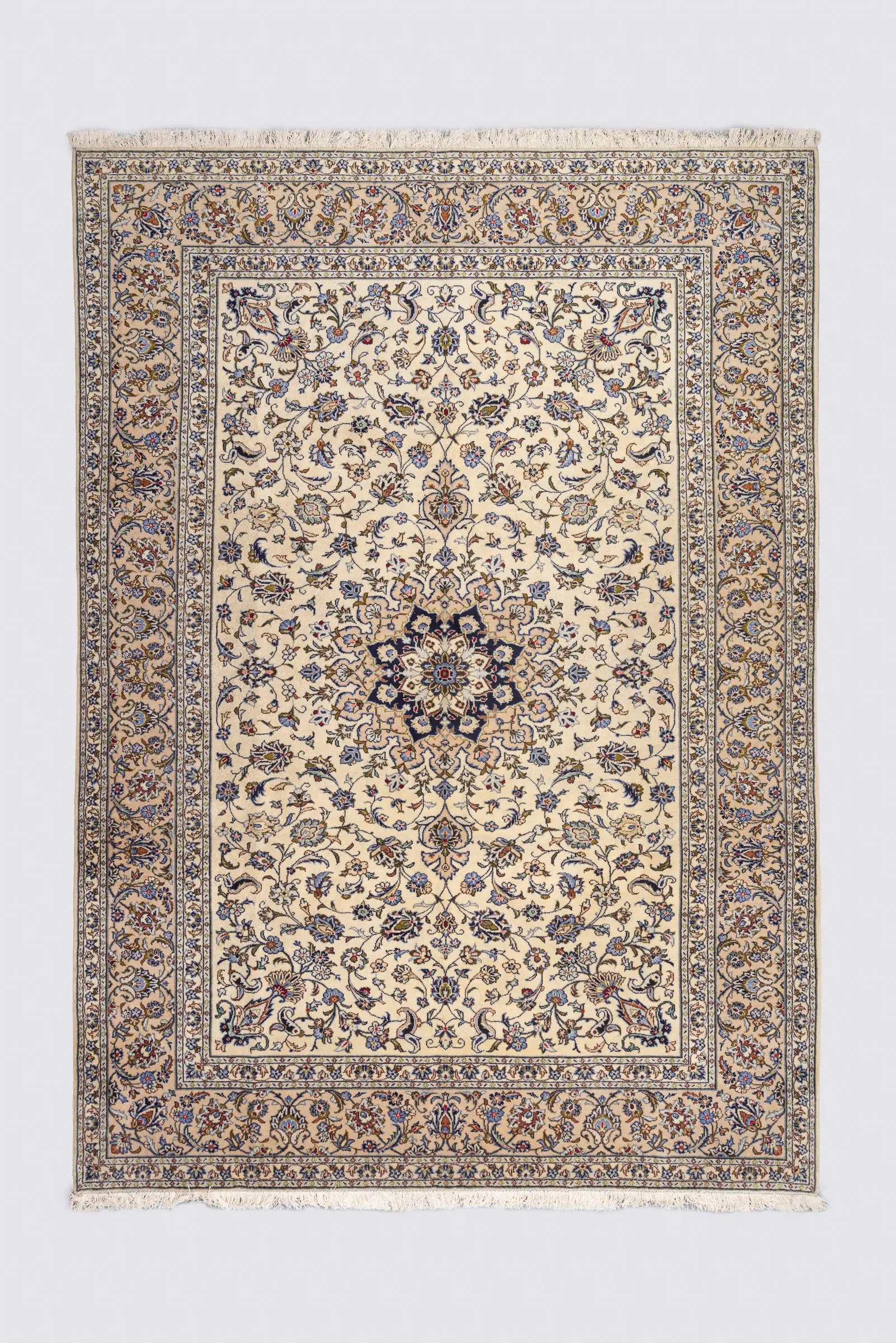
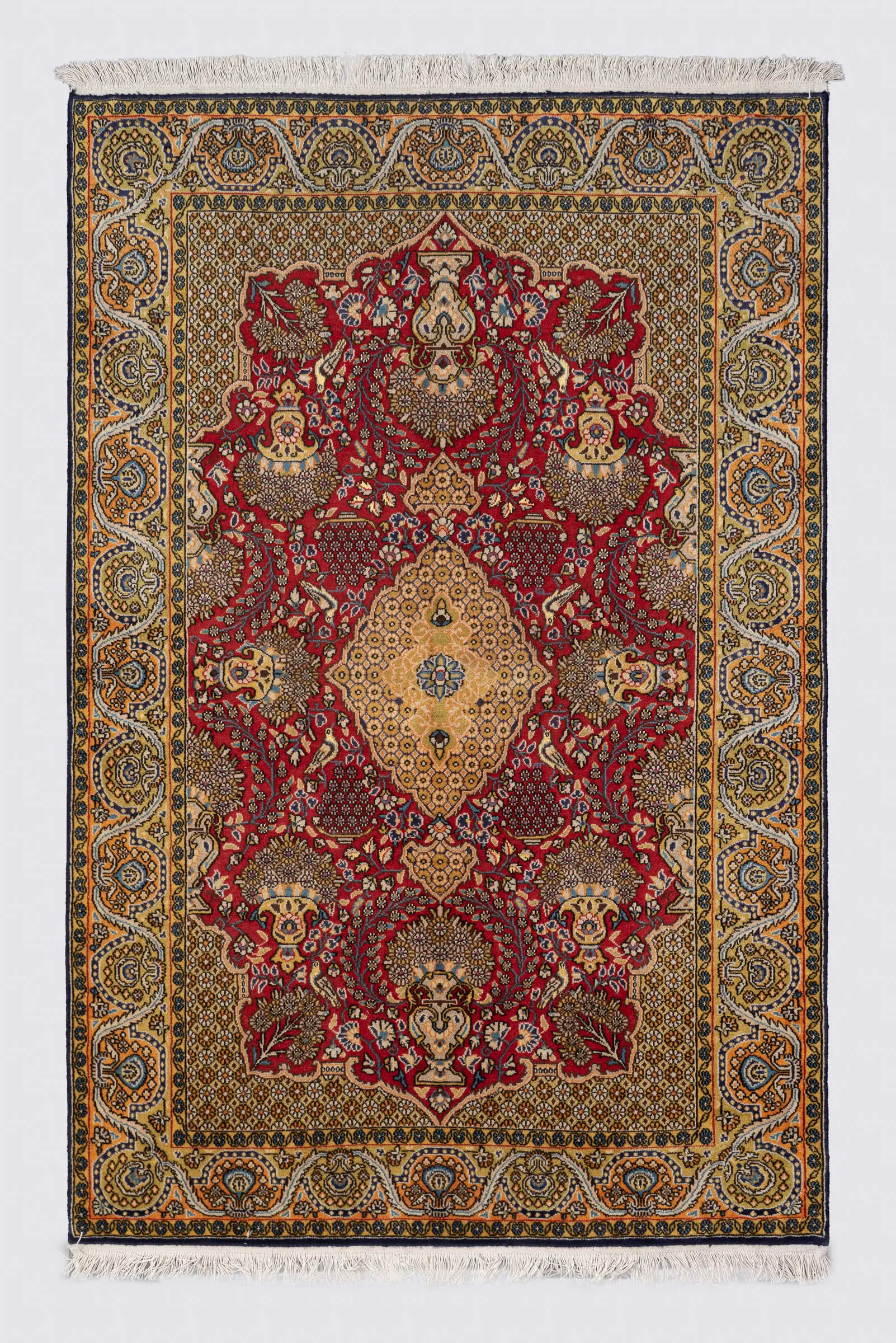
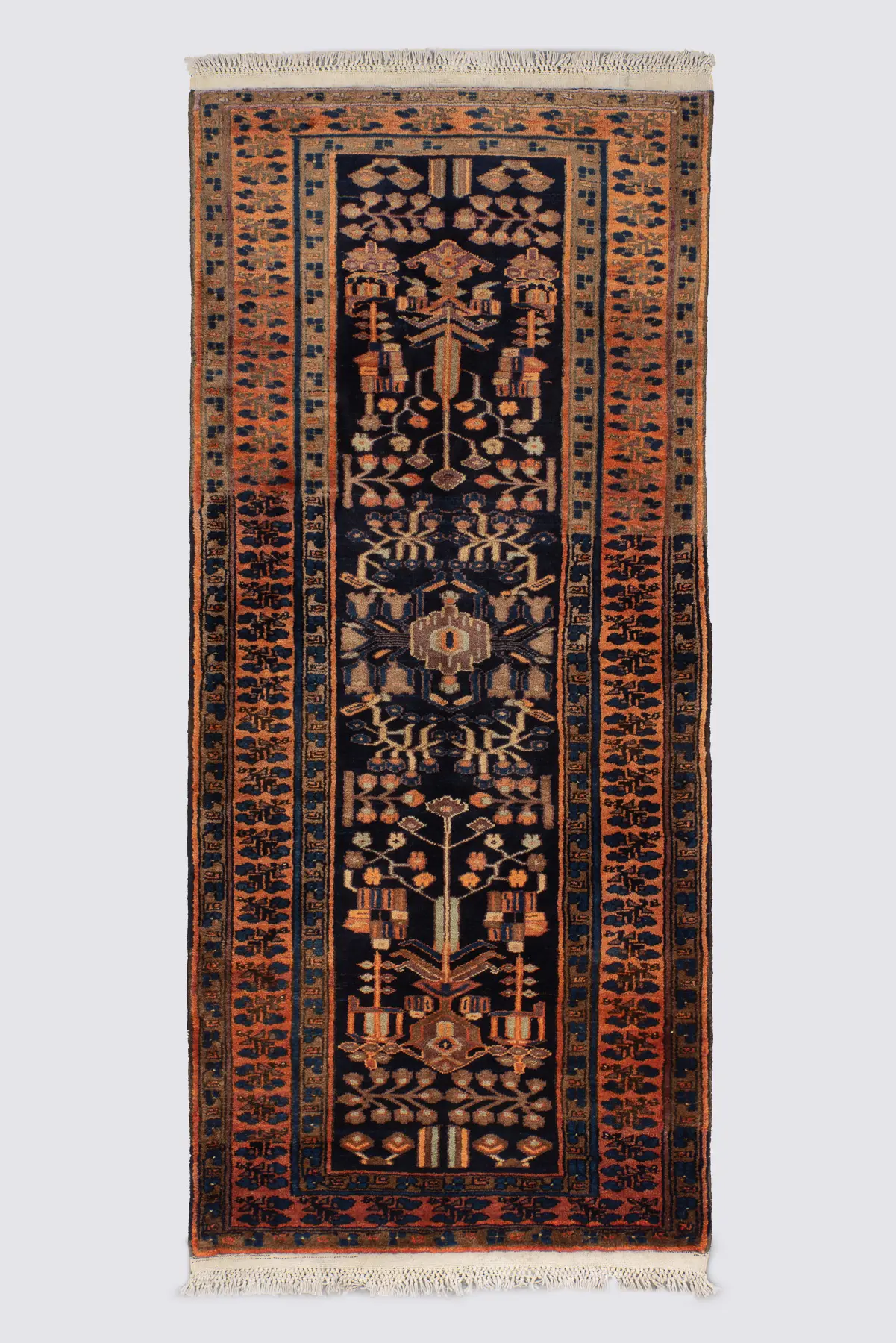
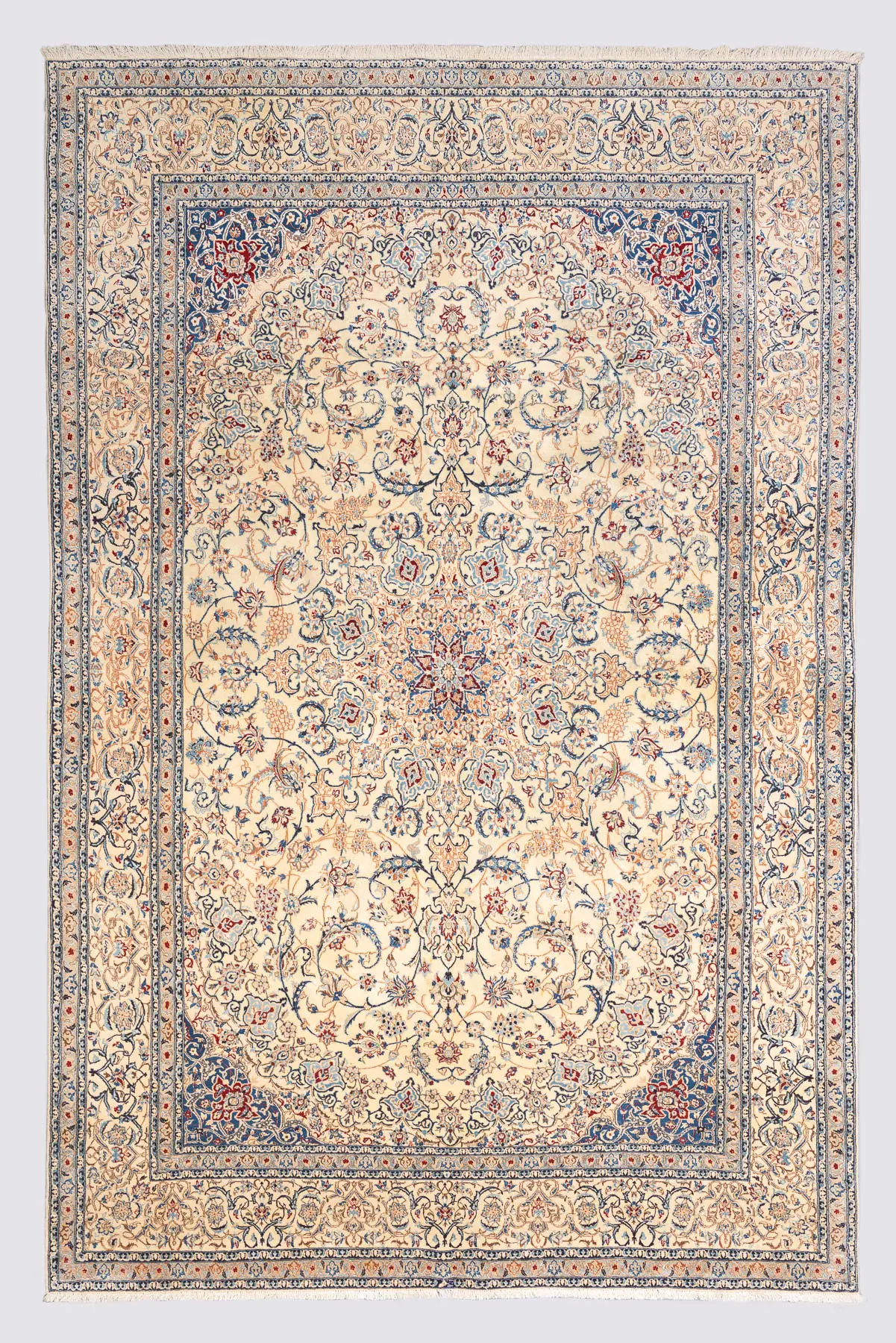
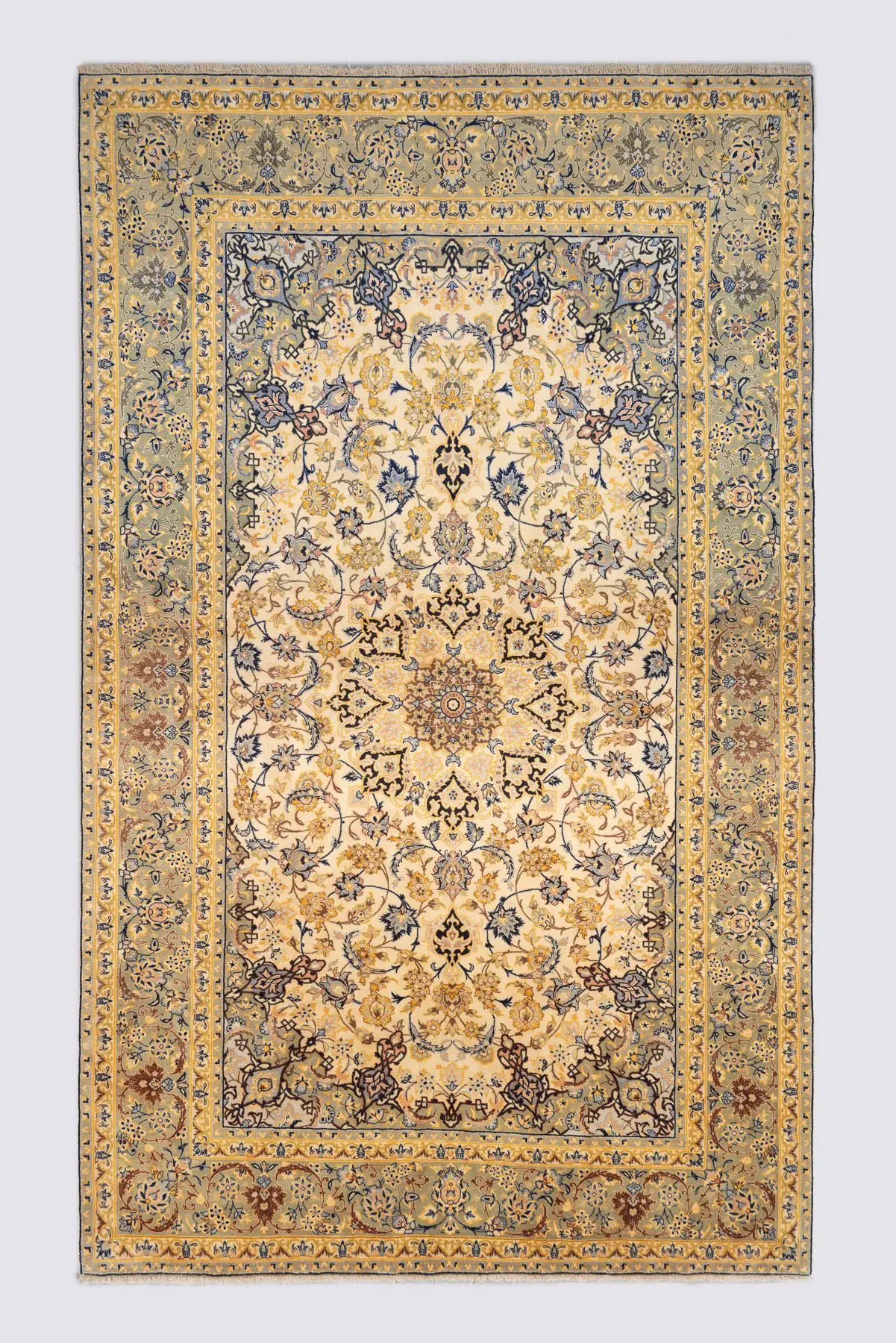
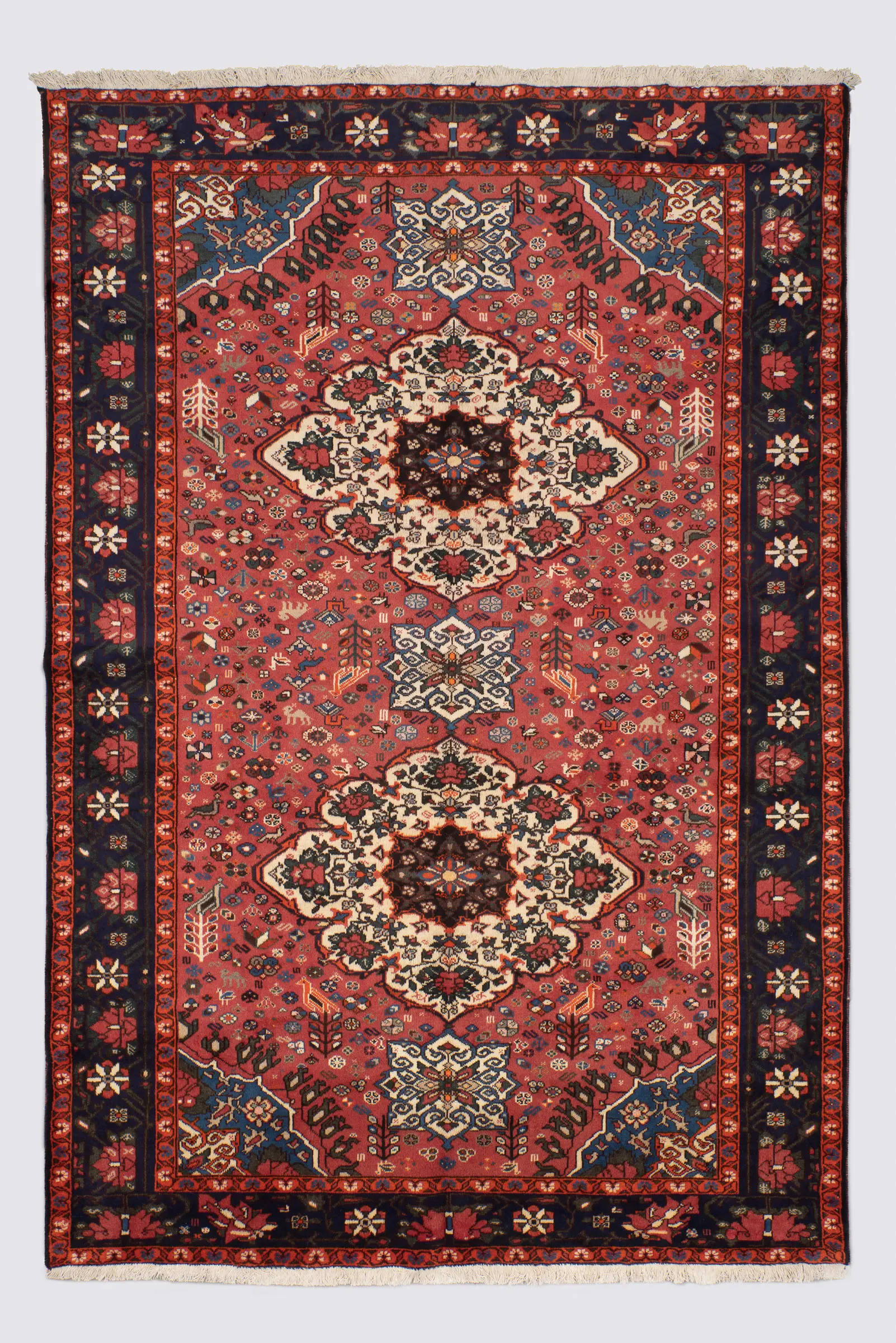
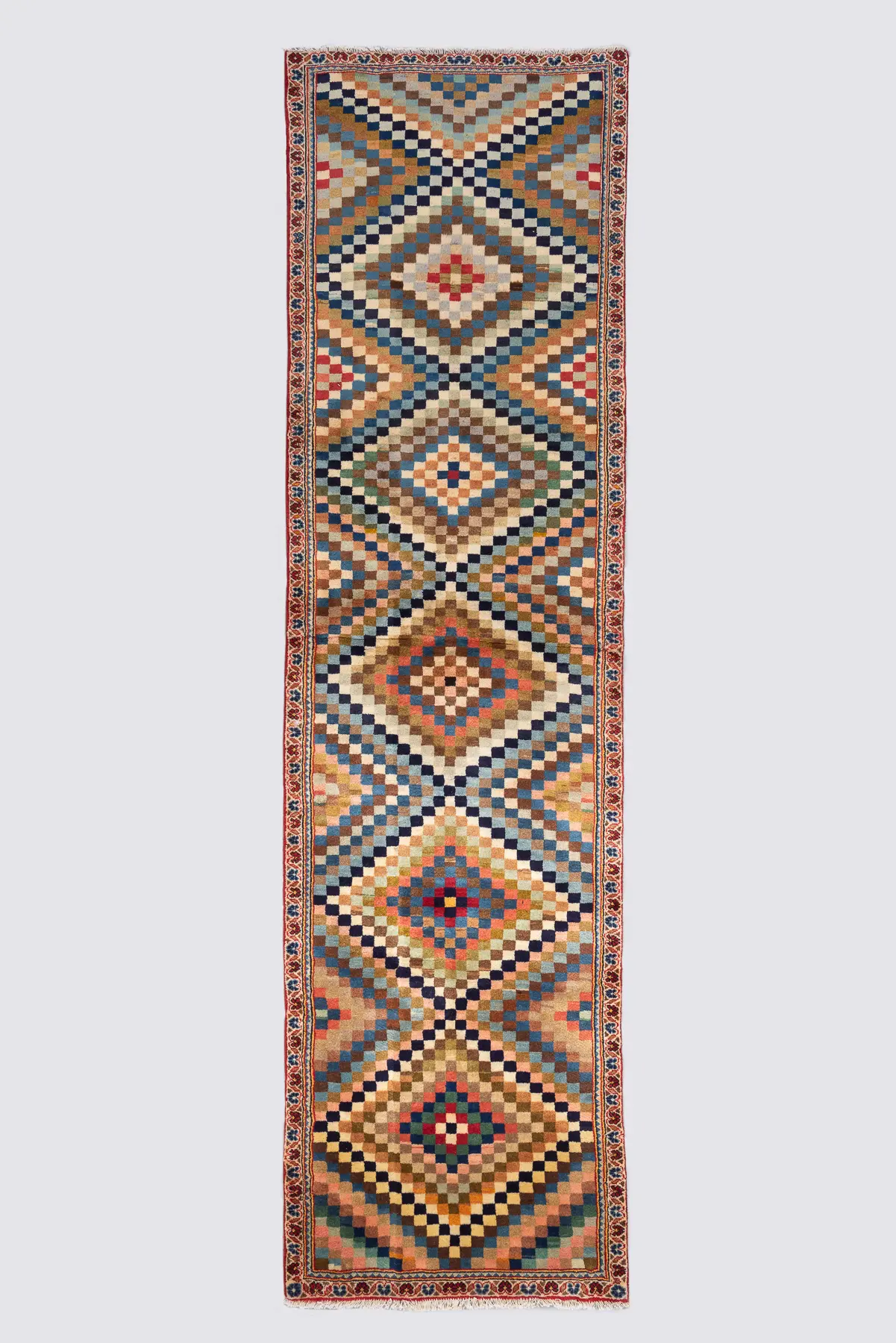
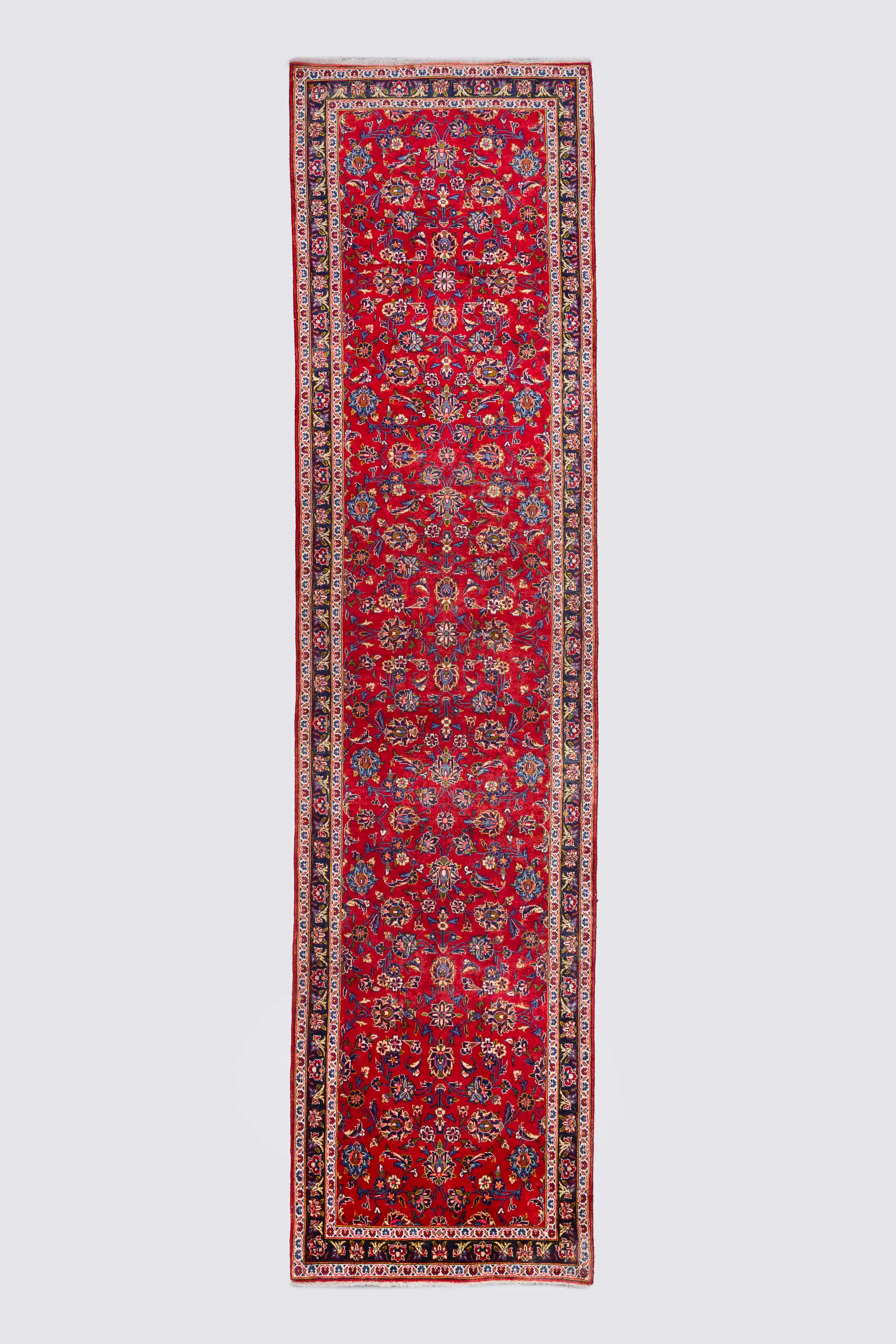
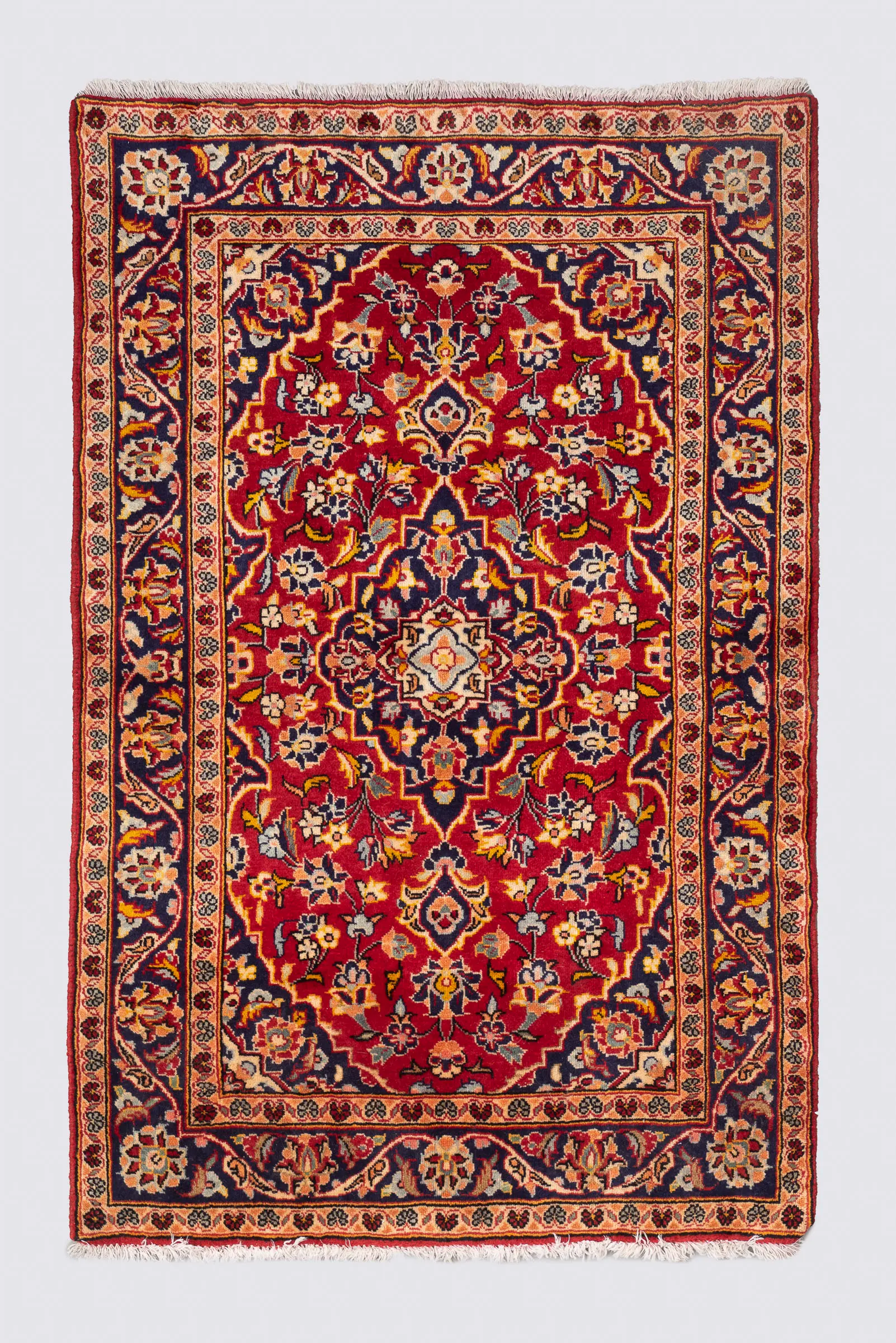
Kashan is a desert city in central Iran with a long record of fine weaving: silk carpets and silk kilims are credited to it in the Safavid period, and a large commercial production of wool and silk pile carpets began there in the early twentieth century. Kashan carpets are asymmetrically knotted on cotton or silk foundations, depending on the pile fibre.
Qom is a shrine city south of Tehran whose carpet industry grew from about eleven weaving villages in 1948 and spread steadily through the 1960s, with materials and designs organised from the city. With Kashan and Nain, it is one of the central Iranian towns where carpets are woven entirely in silk.
Ardakan is a town near Yazd, one of the towns long known for zilu cotton flatweaves, and the home of our Ardakan rugs. A second Ardakan, Ardakan-e Fars, is an upland town north-west of Shiraz in Qashqai summer country.
Nain is a small town east of Isfahan that took up carpet weaving in the twentieth century after its traditional weaving of aba cloaks ended. Nain carpets are very finely knotted, in designs related to those of Isfahan, and the town is one of the central Iranian centres where carpets were woven entirely in silk.
Yazd is a desert city in central Iran whose surrounding towns, notably Meybod and Ardakan, have long been known for zilu (ziloo), a sturdy cotton flatweave made on a special loom, with an extra set of inner warps that sets it apart from other Persian flatweaves. Yazd is also listed among Iran's twentieth-century centres of pile carpet weaving.
Isfahan, the Safavid capital in central Iran, revived carpet weaving from the 1920s, producing fine export carpets drawn by professional designers, often with swirling vines or arabesques on cream grounds. They are closely clipped and asymmetrically knotted on cotton or silk foundations. Many villages around the city had their own weaving traditions.
35 pieces from Central Iran are in the collection now: 30 pile rugs and 4 kilims. Among them are antique pieces woven in 1940 or earlier, vintage pieces from 1941 to 1999 and new weaves from 2000 on. They run from 0.5 m² to 13.4 m², so filter by size to find one for your room. Every one is handwoven in Iran, comes with a Certificate of Origin, and can be seen at our Richmond gallery.
FREQUENTLY ASKED
Where can I buy authentic Persian rugs in Melbourne?
Dyad Artisans is Melbourne’s specialist gallery for authentic Persian rugs, kilims, and collectible carpets. The gallery is at 273a Swan Street, Richmond, open Wednesday to Sunday or by appointment. Almost every rug at Dyad Artisans is Persian, woven in Iran. Now and then we bring in a piece from a neighbouring tradition, a Kuba from the Caucasus or a Hereke design from Anatolia. Each is what its name says, woven where it belongs. We do not sell imitations. Every rug comes with a Certificate of Origin.
Do you ship Persian rugs Australia-wide?
Yes. Dyad Artisans ships authenticated Persian rugs Australia-wide by courier. We offer free delivery on orders over $200 Australia-wide. Every rug ships with its Certificate of Origin card.