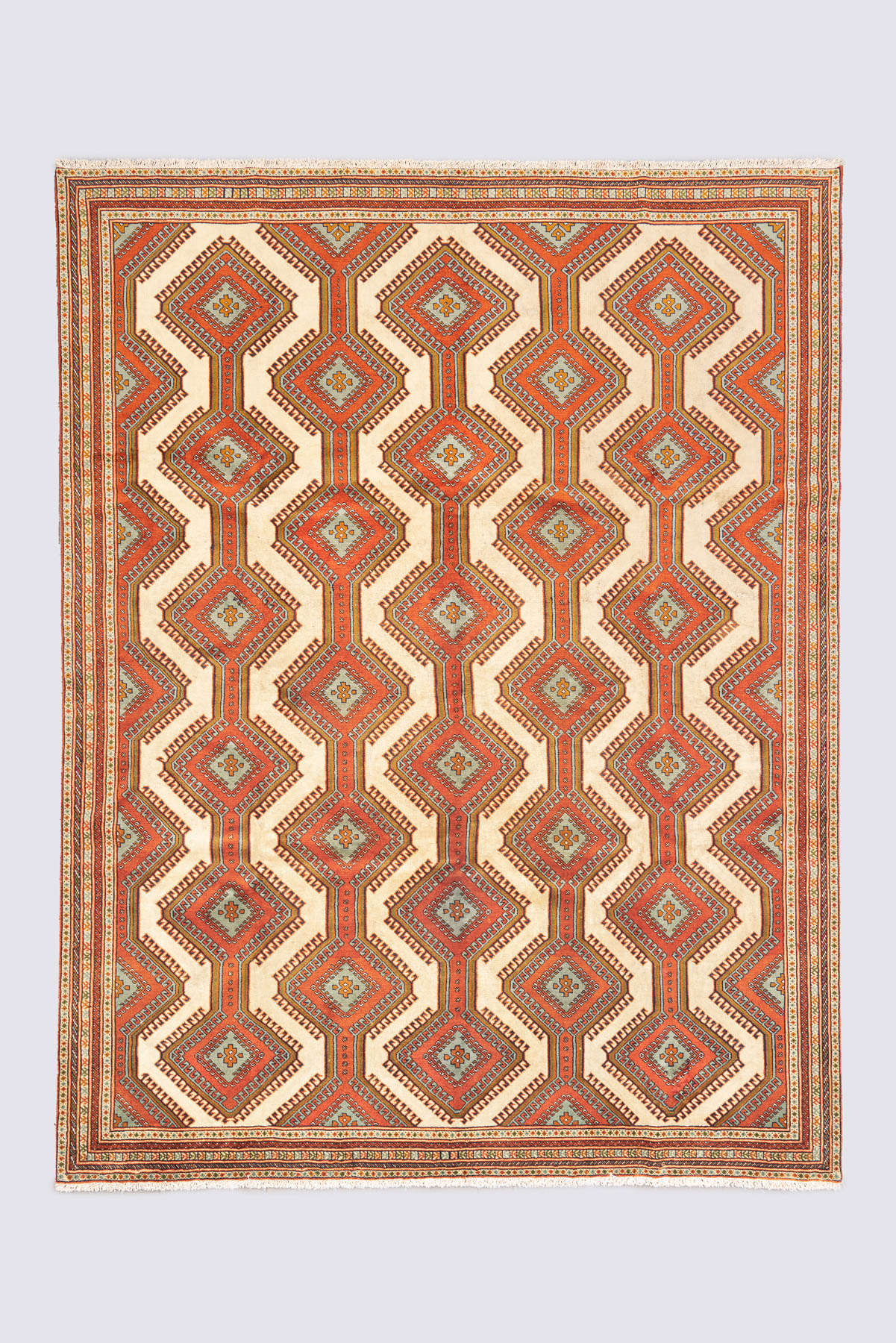
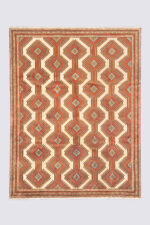
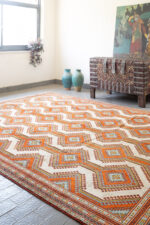
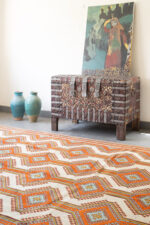
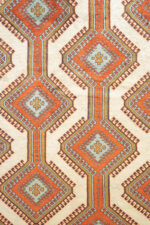
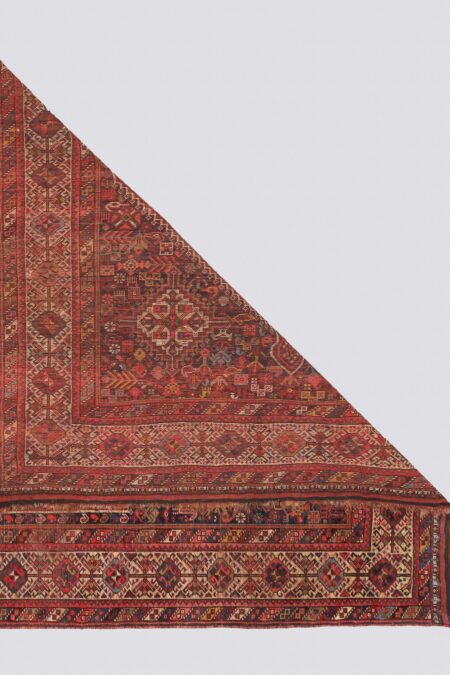
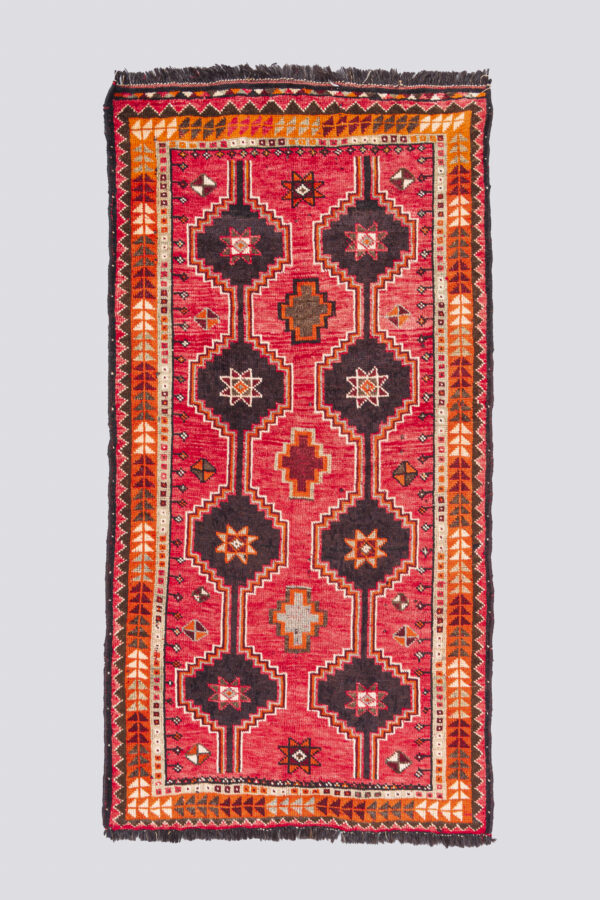
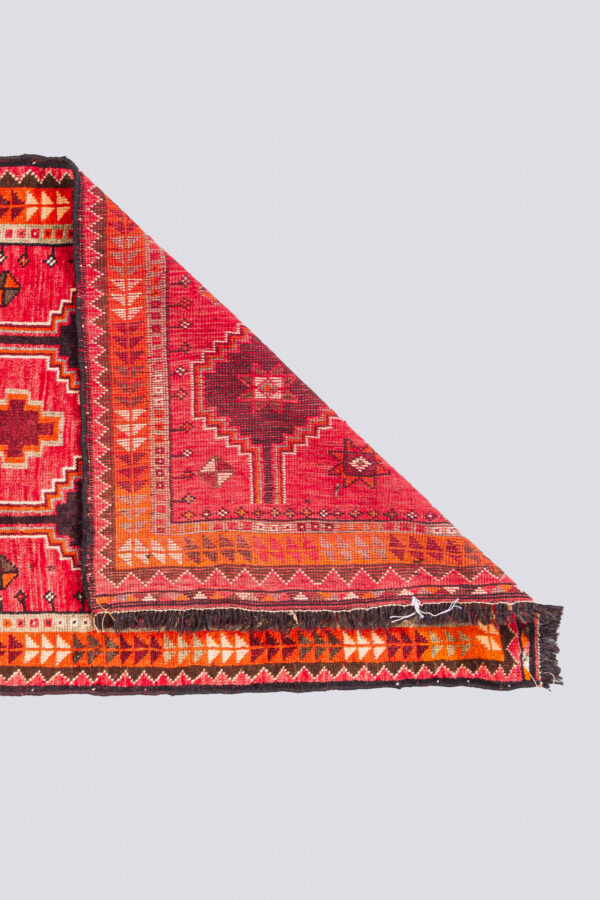
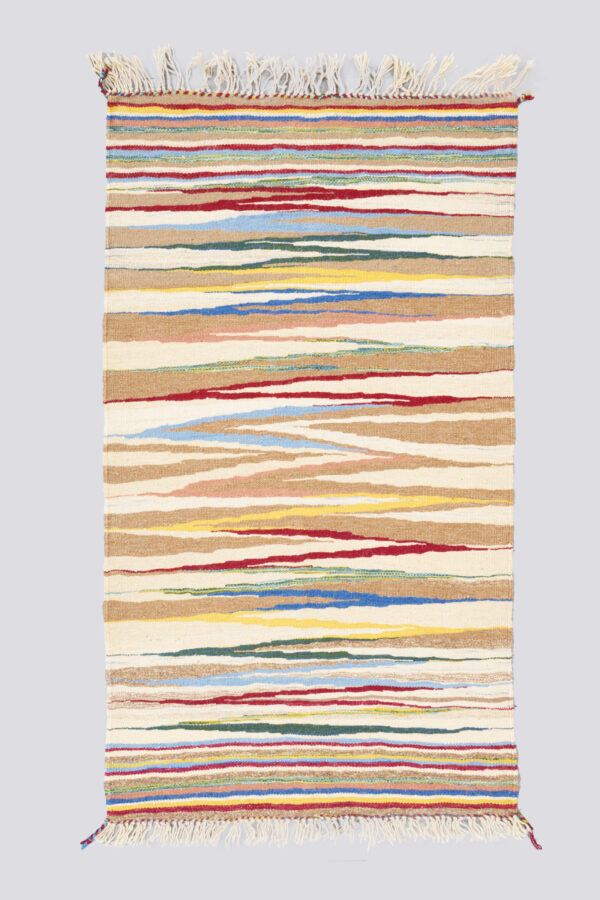
Turkmen Carpet, Howz Design, Ivory Ground, Circa 1980s, 300 x 230 cm

Turkmen Carpet, Howz Design, Ivory Ground, Circa 1980s, 300 x 230 cm

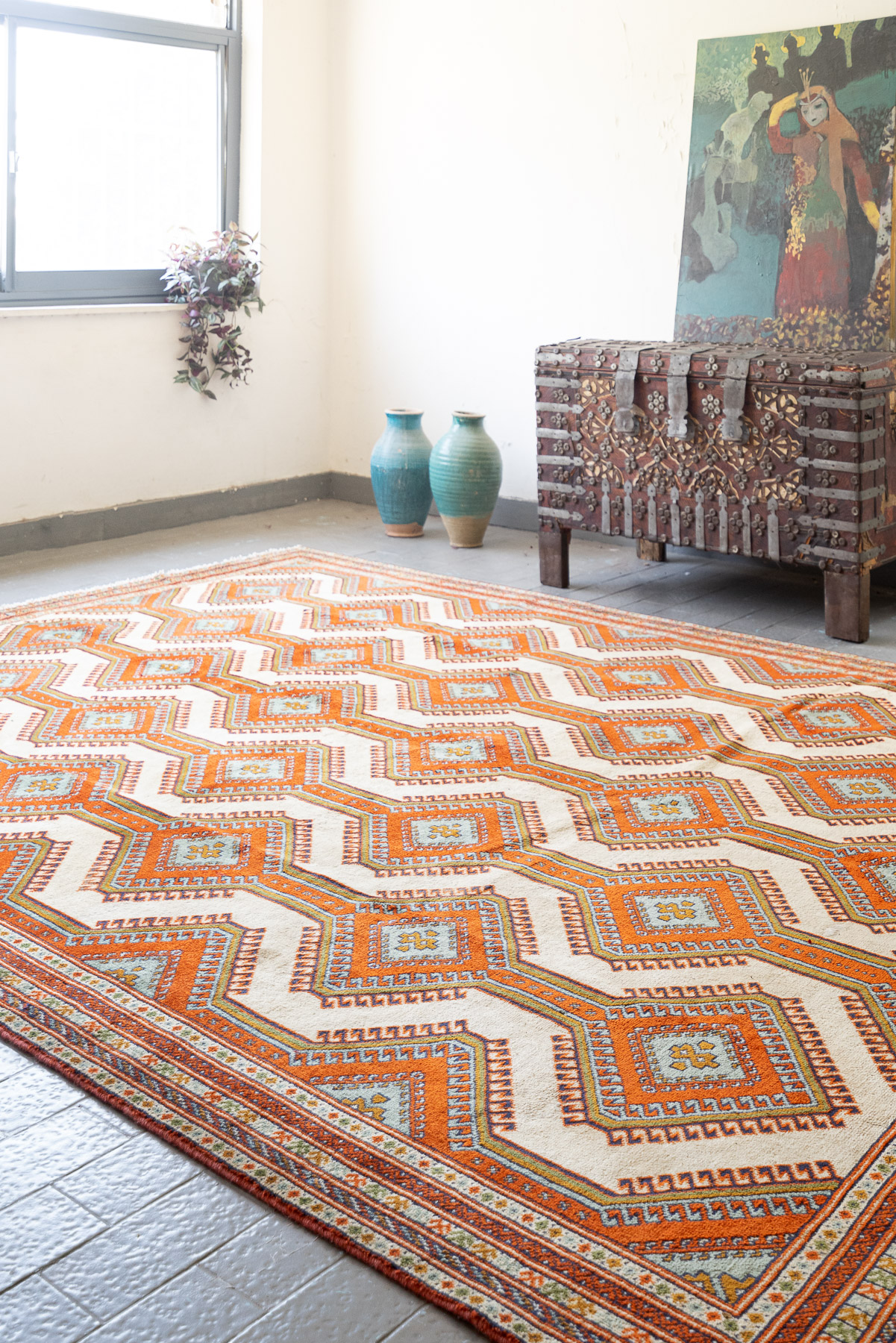
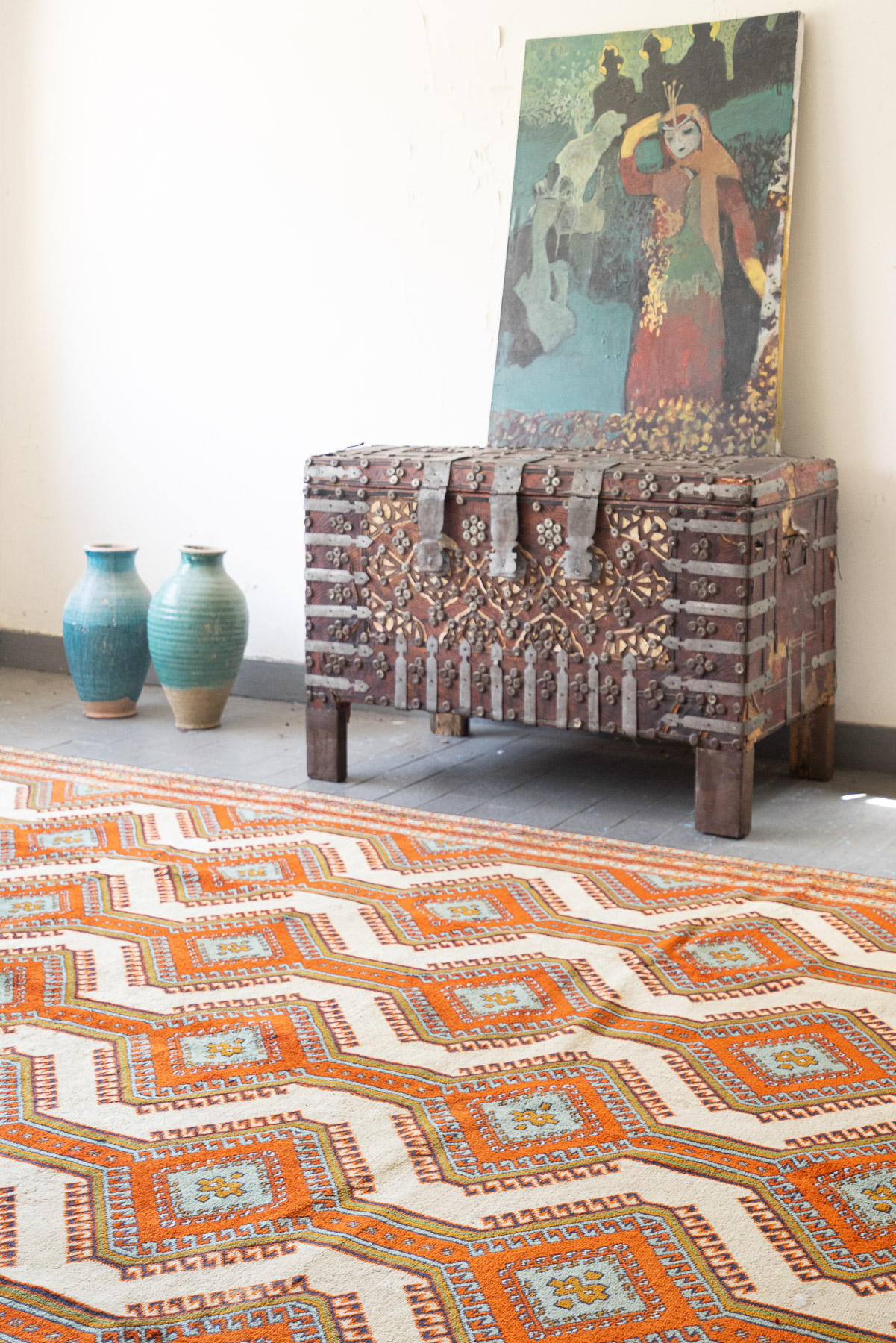
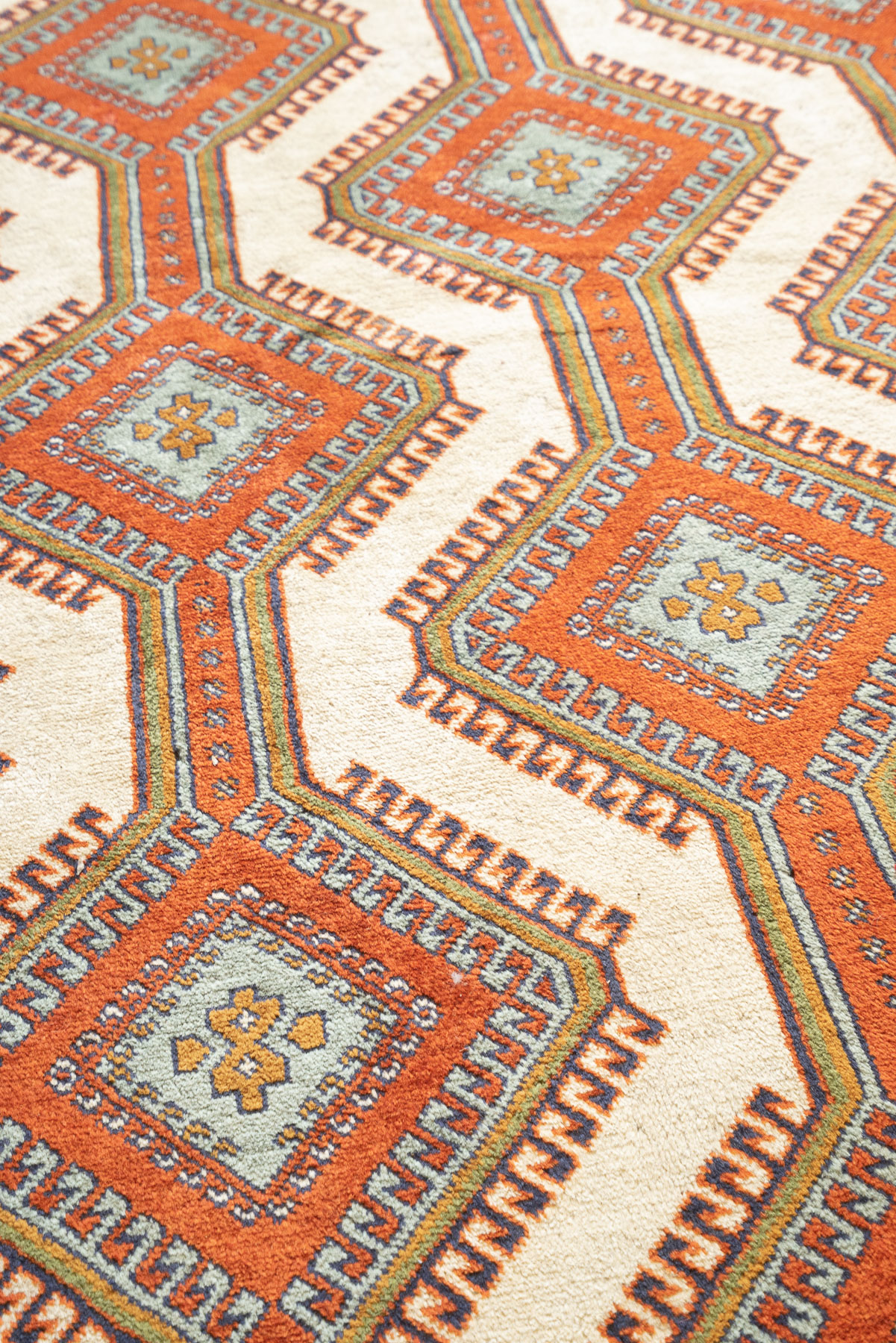
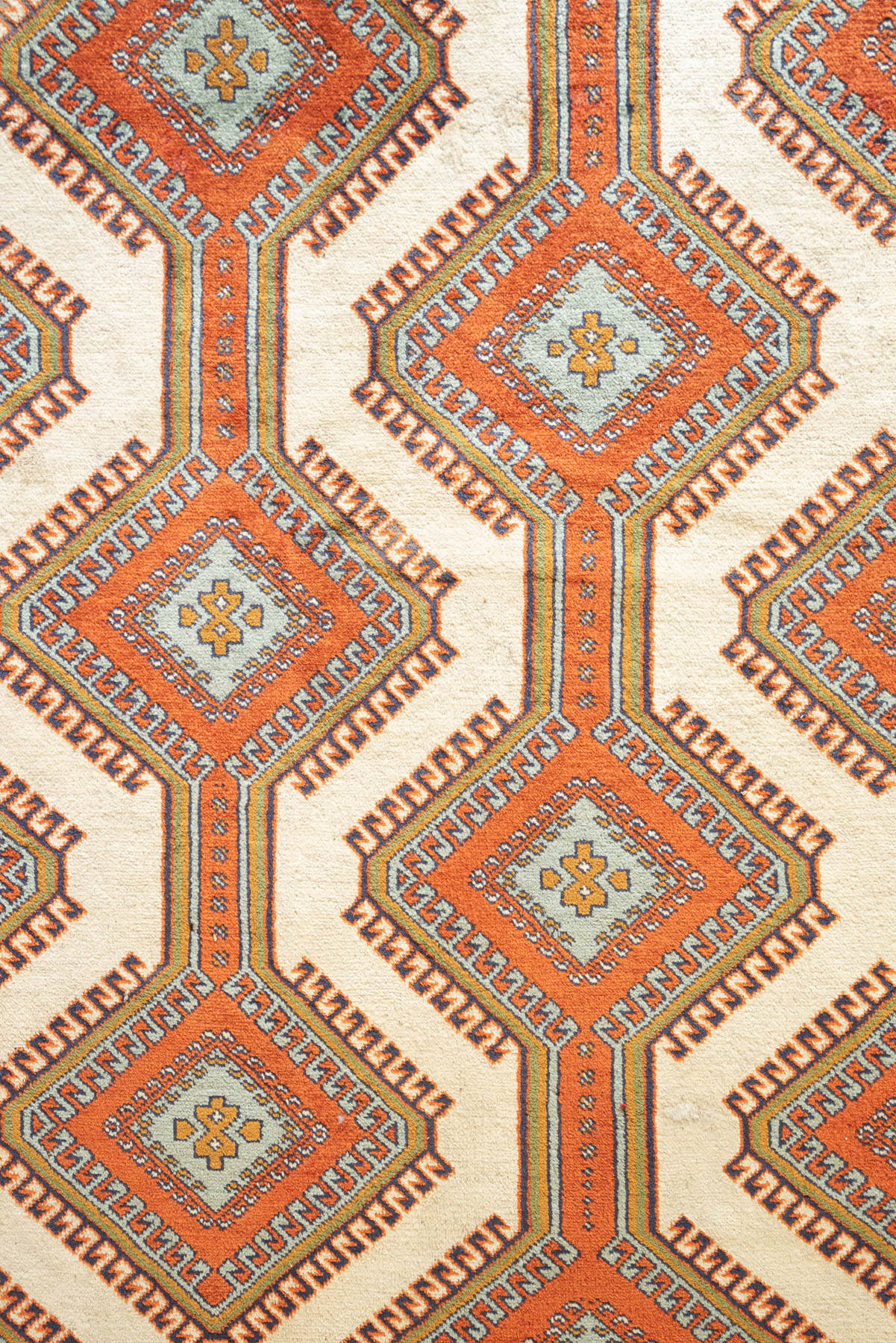
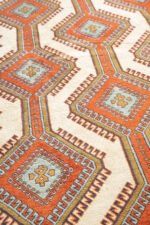
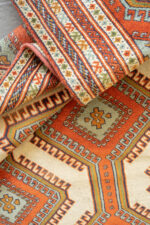
Turkmen weaving is overwhelmingly a tradition of deep madder red, which is exactly what makes this carpet so unusual. Here the classic howz design of the Turkmen Sahra, known in the trade as howzi and sometimes spelt hauz, weaves chains of stepped and serrated lozenges linked through a zigzag lattice across an ivory ground in rust, celadon and ochre. The result keeps all the graphic strength of tribal Turkmen design while sitting effortlessly in contemporary rooms where a red-ground piece never could. Ivory-ground examples of this design are genuinely scarce.

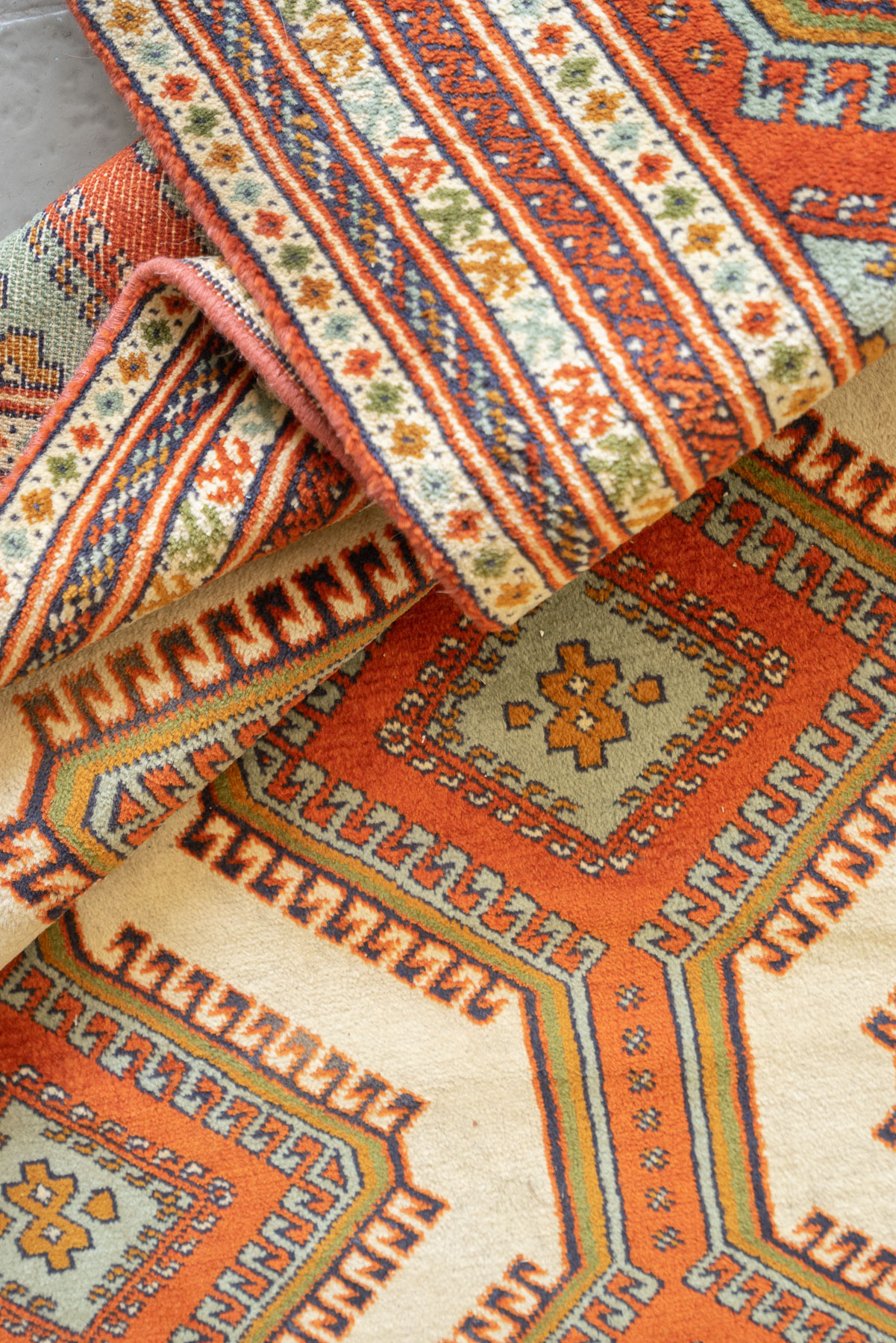
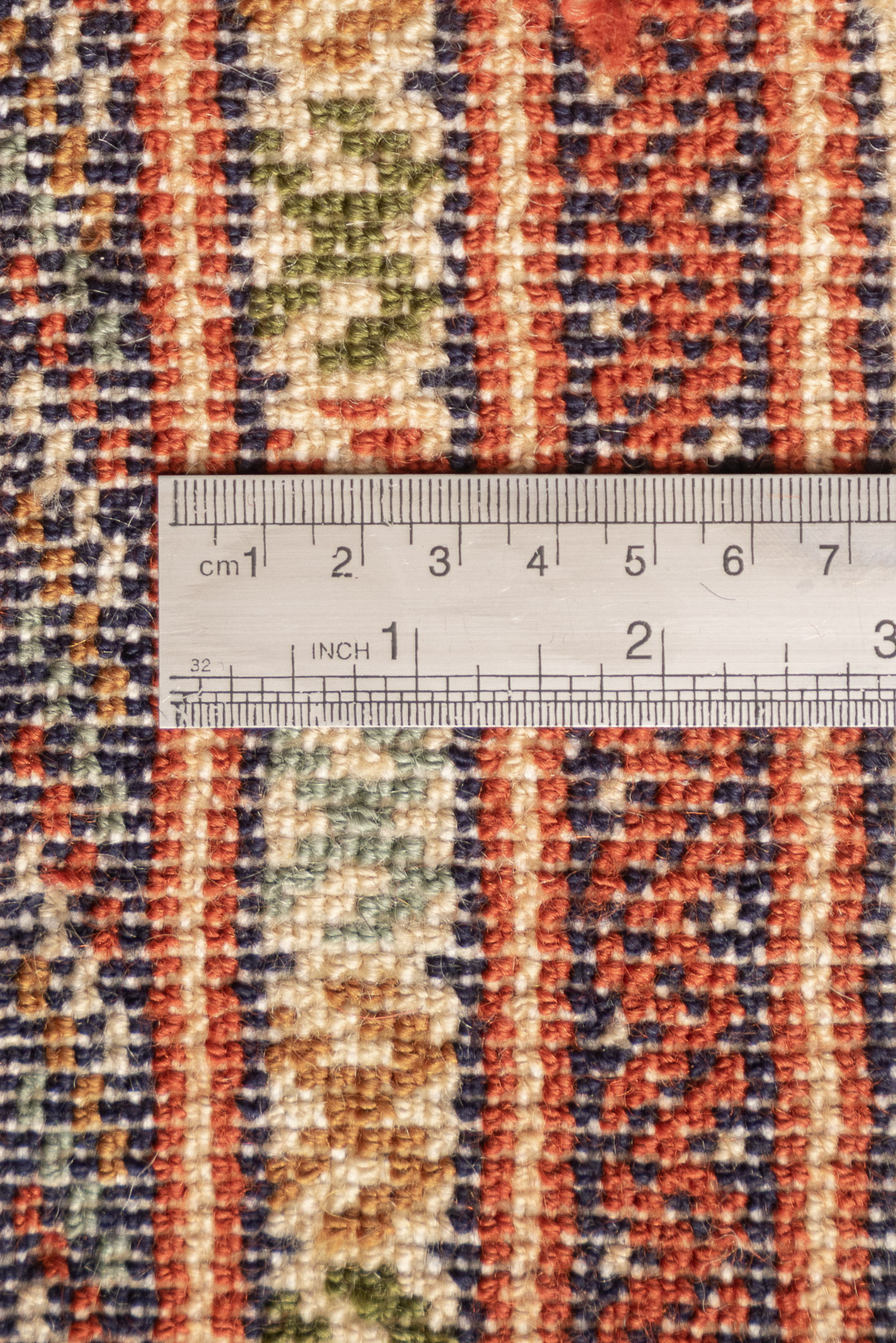
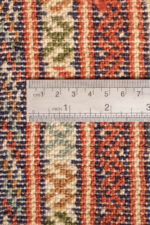
It was woven by Turkmen weavers of the Gonbad-e Qabus region in Iran’s northeast around the 1980s, hand-knotted in wool on a cotton foundation. Our analysis measured the density at approximately 300,000 knots per square metre, a fine grade for the type, and it shows in the crisp drawing of the serrated profiles. The wool is the piece’s second distinction: soft, lustrous and almost silky in hand, closer to kork quality than tribal weaving usually offers, with full unworn pile throughout.

At 300 x 230 cm this is a generous room size, and a handmade one-of-a-kind alternative to contemporary designer rugs of similar scale at a fraction of their price. A named tribal design, finely woven, in the one palette the tradition almost never produced.

Specs: Origin: Turkmen Sahra, Gonbad-e Qabus region, Iran. Design: howz (howzi). Age: circa 1980s. Structure: hand-knotted wool pile on cotton, approx. 300,000 knots per square metre. Size: 300 x 230 cm.

Additional information

CraftCarpet
OriginTorkaman
ProvenanceQ4 20th Century
MaterialityWool on cotton
Area6.9
Dimensions300 × 230 cm
Weight17.00 kg

$6,490

$6,490

In stock

Available in Showroom

SKU: RCA475

FAQ

Dyad Artisans uses  Australia post as the main courier service to ship our products, both locally and internationally.

Shipping costs are influenced by the size and weight of the product and your location, you will be advised all shipping charges in the shopping cart and will be added to the order total before checkout. 

Courier services used by Dyad Artisans are registered, with a unique tracking number advised as soon as we dispatch to you. Where we use specialist courier services we will email you with those details directly. 

Packing and delivery – Orders are normally dispatched within 2-3 business days and shipping times are estimated at between 3-7 business days depending on your location within Australia.

Tracking Your Order – Once you have placed your order you will be sent a confirmation email that your order has been received by Dyad Artisans. You will receive another email once your order has been shipped – and this will include a unique tracking number.

It’s Ok to change your mind!

In short we offer 14 day change of mind refund but please read our full exchange policy, click here.

Dyad Artisans is not an ordinary rug store but a retailer that specialises in Persian hand-weaves whose products are handpicked and curated by its experts and Dyad founder himself from well-known workshops all over Iran and without any middlemen. This way of purveying and commissioning allows us to be sure of the authenticity of all our products and also helps us to keep the prices as low as possible for the well-being of our customers.

Another noteworthy point is that all of our carpets have a Certificate of Origin and genuinity, which is attached at the back of the carpets. These cards contain all the required product information, including origin, Provenance, Materiality, Dimensions, Weight, Craft, and area of the carpets. ID Cards also include a QR code through which you can always access the information on your carpet.

You can also read our blog about how to identify handwoven rugs and other related stories here.

Here are some quick tips on how to take care of your rug, but for more detailed information please read through our blog post here.

  • Vacuum regularly (slowly in the direction of the fibres) to extend your rug’s life.
  • Air it out to help prevent moisture buildup.
  • Rotate once a year to distribute wear and fading.
  • Clean spills immediately to minimise damage.
  • Only wash your rug sparingly and use professional handwoven rug washers.
  • If you want to store your rug roll it and lie it flat in a cool, dry area, out of direct sunlight and remember to use pest protection in the area. 

The digital images we display have the most accurate colour possible. However, due to differences in computer monitors, there can be slight variations in colour between the actual product and your screen. If you can calibrate your monitor, you can have the most precise possible colour rendition.

A major appeal of Persian rugs is they are an art form that is beautiful yet robust. It is impossible to predict how long a rug will last, but quality pieces can last for centuries while in use if properly maintained. One of the significant benefits of hand-knotted rugs over machine-made rugs is that the wool does not tend to shed as much as the knots are secure. Depending on the level of traffic, the quality of the rug and the level of care it receives, your rug could last anywhere from 30 to 300 years. Rugs held by collectors and sold for hundreds of thousands or millions can often be several centuries old.

The measurements displayed on the website do not include the fringes. 

Imperfections and minor variations are an inherent and celebrated aspect of Persian carpets, adding to their charm and value. Since these carpets are handwoven, some variations are unavoidable but are actually appreciated for making each carpet unique. In fact, imperfections are particularly common in nomadic carpets, which are woven on more primitive looms in rural areas. It’s worth noting that in some cases, these imperfections are even intentional and known as the “Persian Flaw.” This term represents the idea that only a god can create something perfect and serves as a deliberate nod to the belief that beauty lies in imperfection.

Remember that your carpet is made of natural fibres and should be able to breathe if you need to store it.

There are two golden rules for storing a Persian carpet. For the short term, loosely roll up the carpet and tie a piece of string or rope around it to maintain the shape.

For a long period, wrap it in a moth-proof cotton or linen bedsheet and store it lying down in a cool, dry area, out of direct sunlight. Check the rug every few months.

Related Stories