Isfahan Silk Warp Persian Rug, Mid 20th Century, 325x198cm

Isfahan Silk Warp Persian Rug, Mid 20th Century, 325x198cm

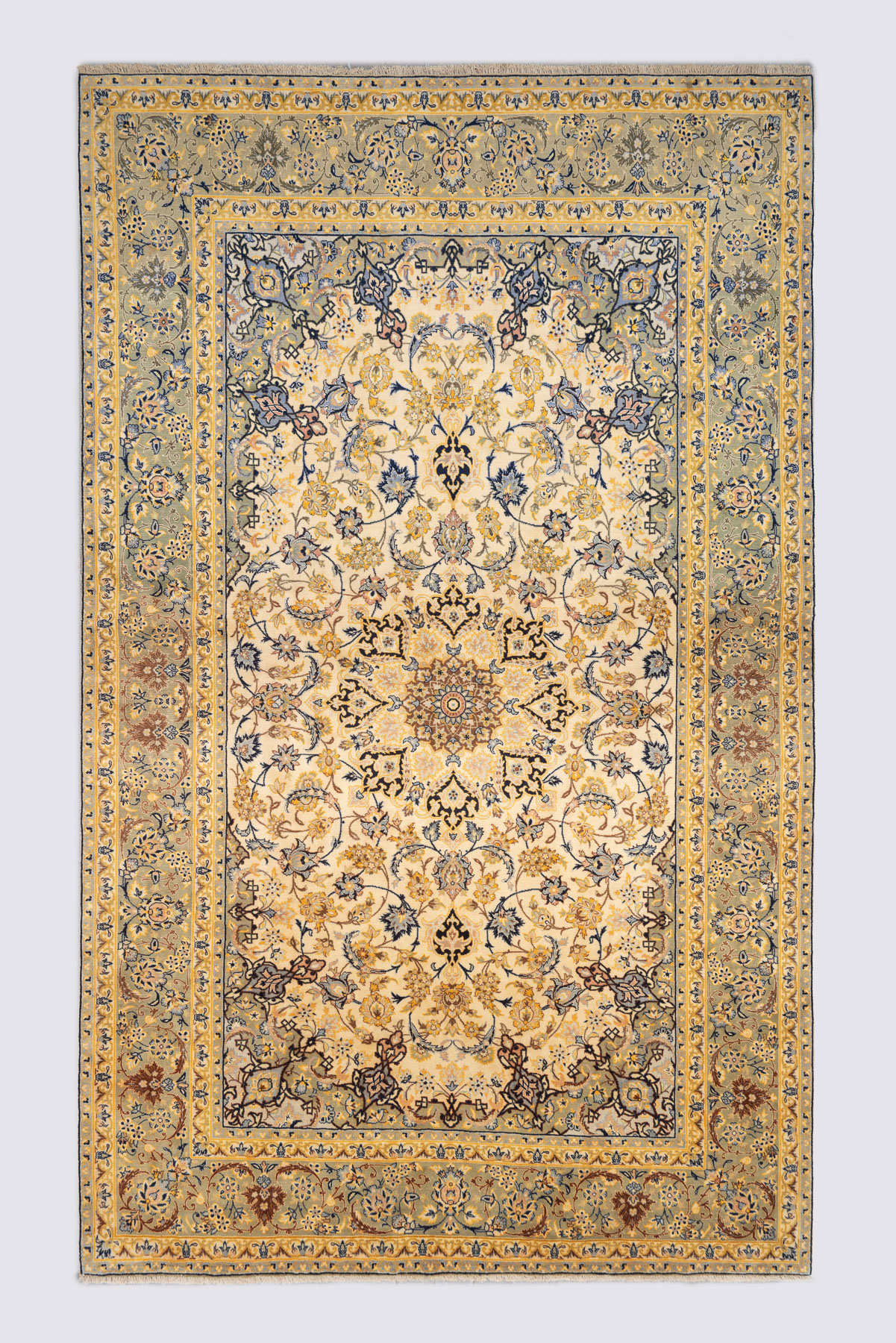
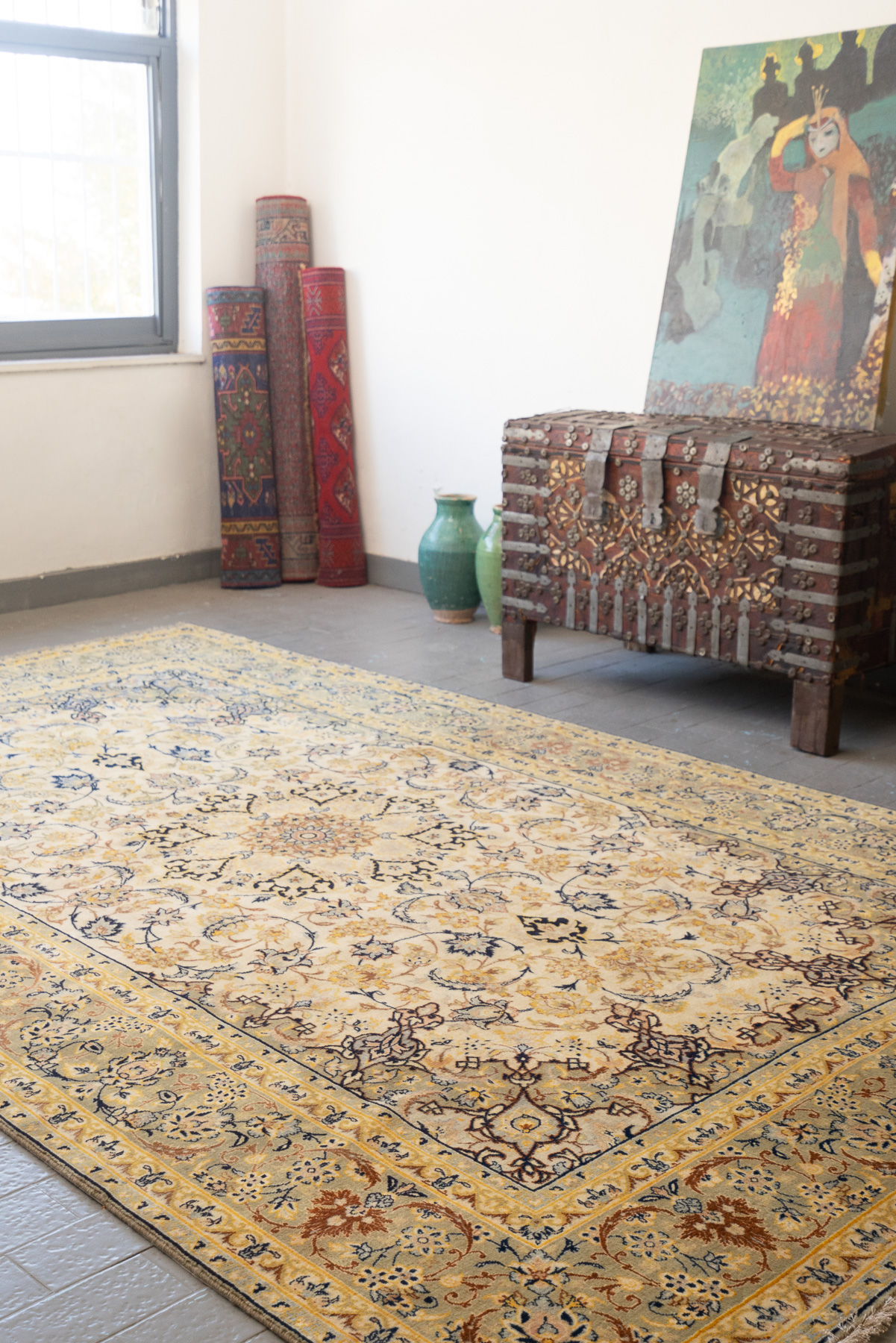
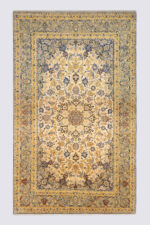
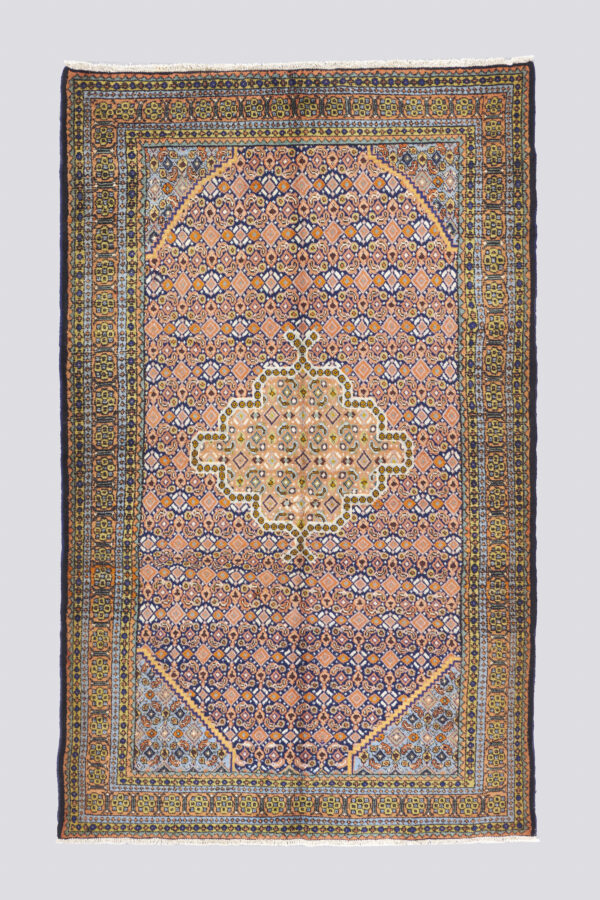
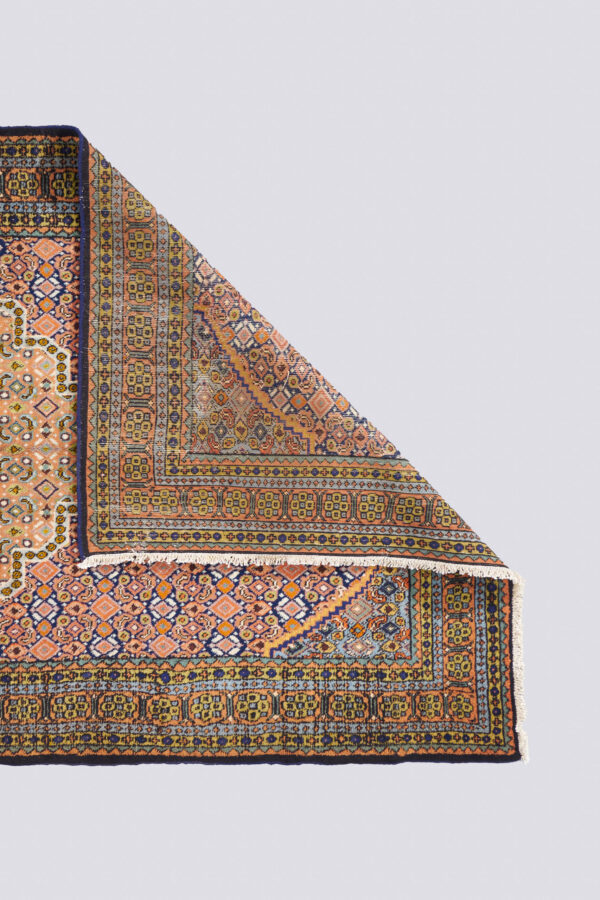
An Isfahan Persian rug from central Persia, hand-knotted in fine wool on a silk foundation in the mid-20th century, with a star medallion on an ivory field.

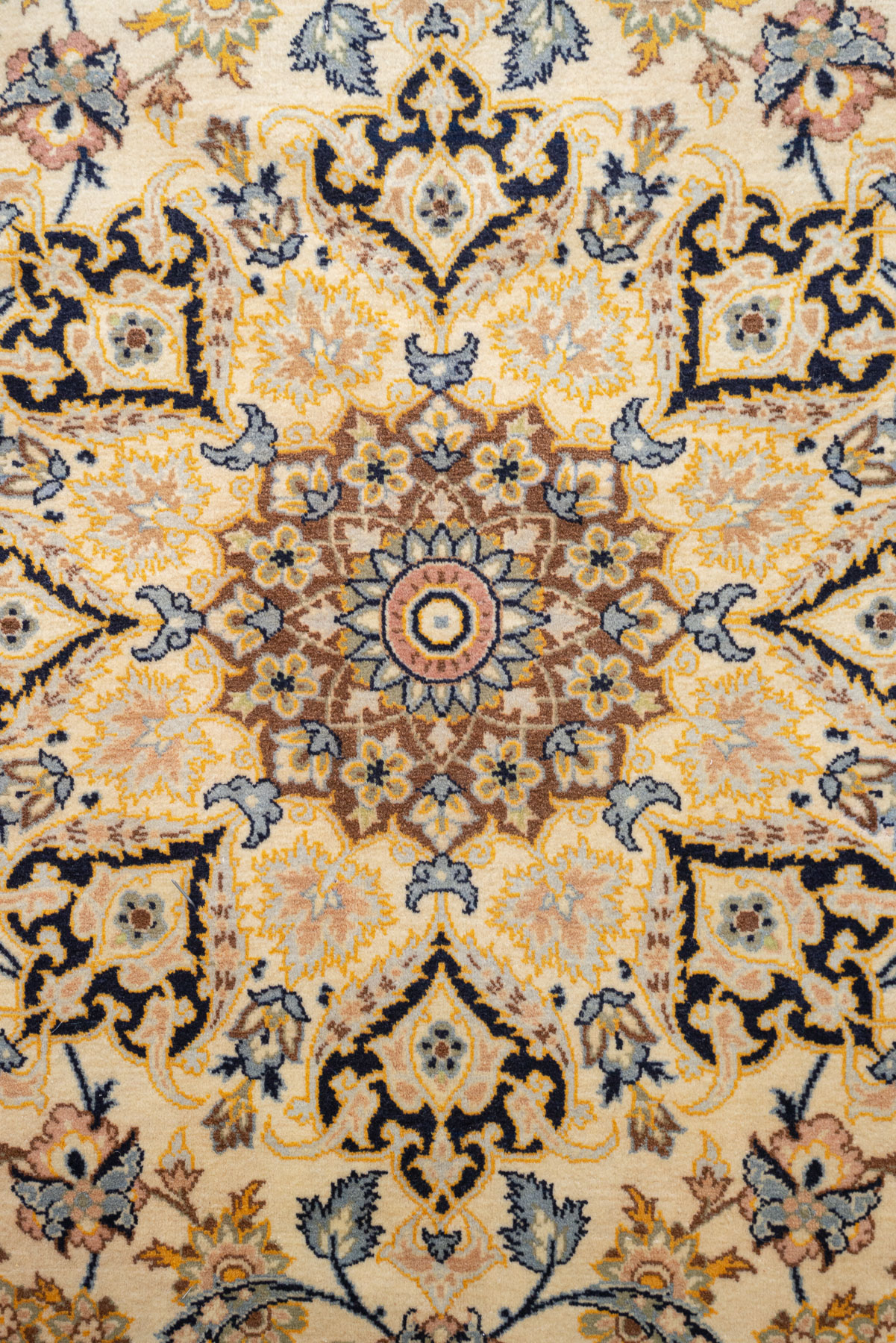
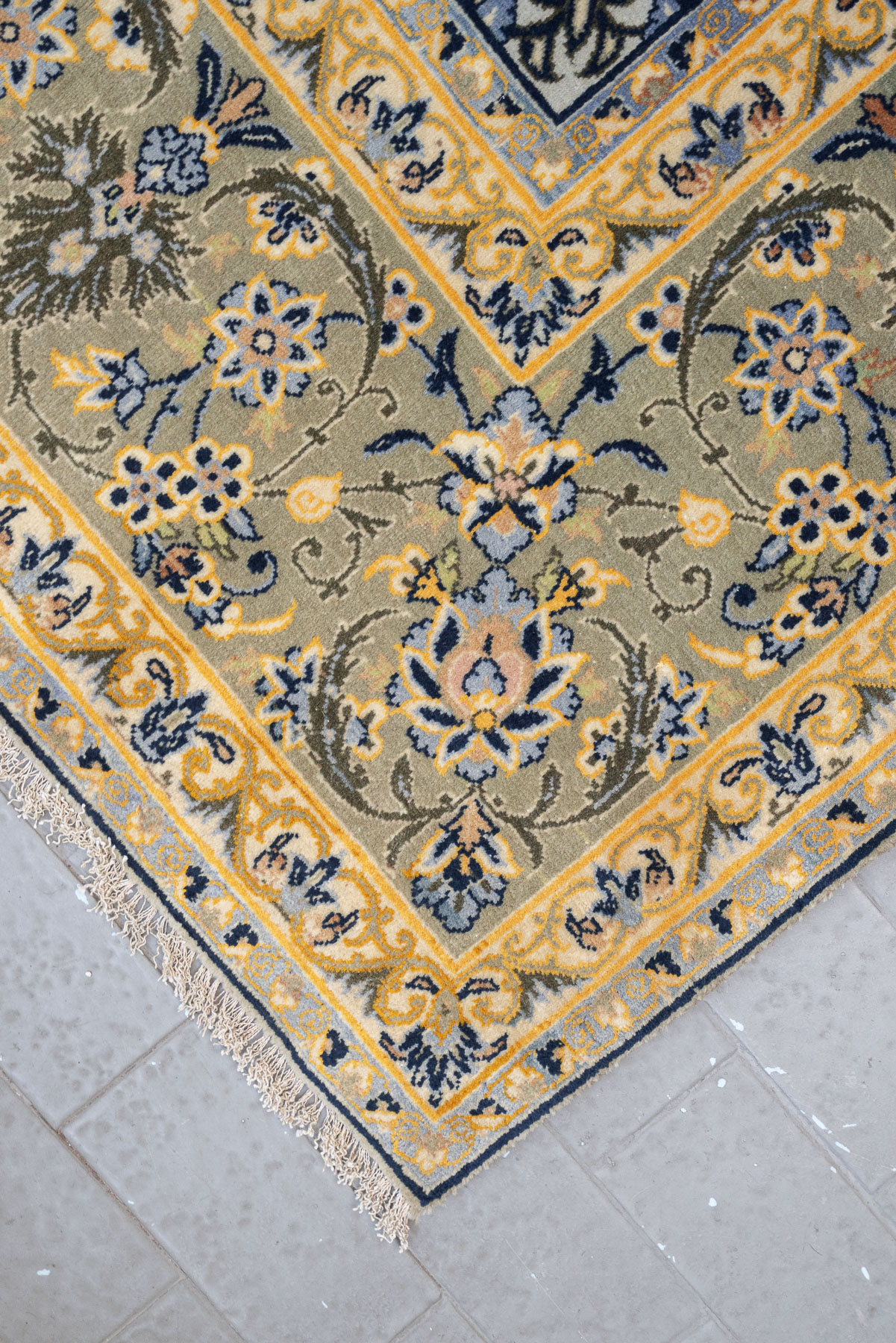
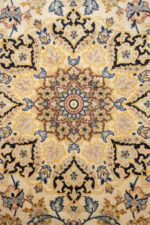
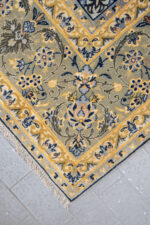
A lobed star medallion in saffron, ivory and navy sits at the centre of the field, with pendants above and below and black and gold arabesques unfolding from it towards corners of pale blue. Palmettes, blossoms and scrolling vines in powder blue, salmon and brown fill the ivory ground, in the fully curvilinear drawing that Isfahan, the old capital of Safavid Persia, has been known for since the sixteenth century. A wide sage-green border carries more of the same between guards of ivory and gold.

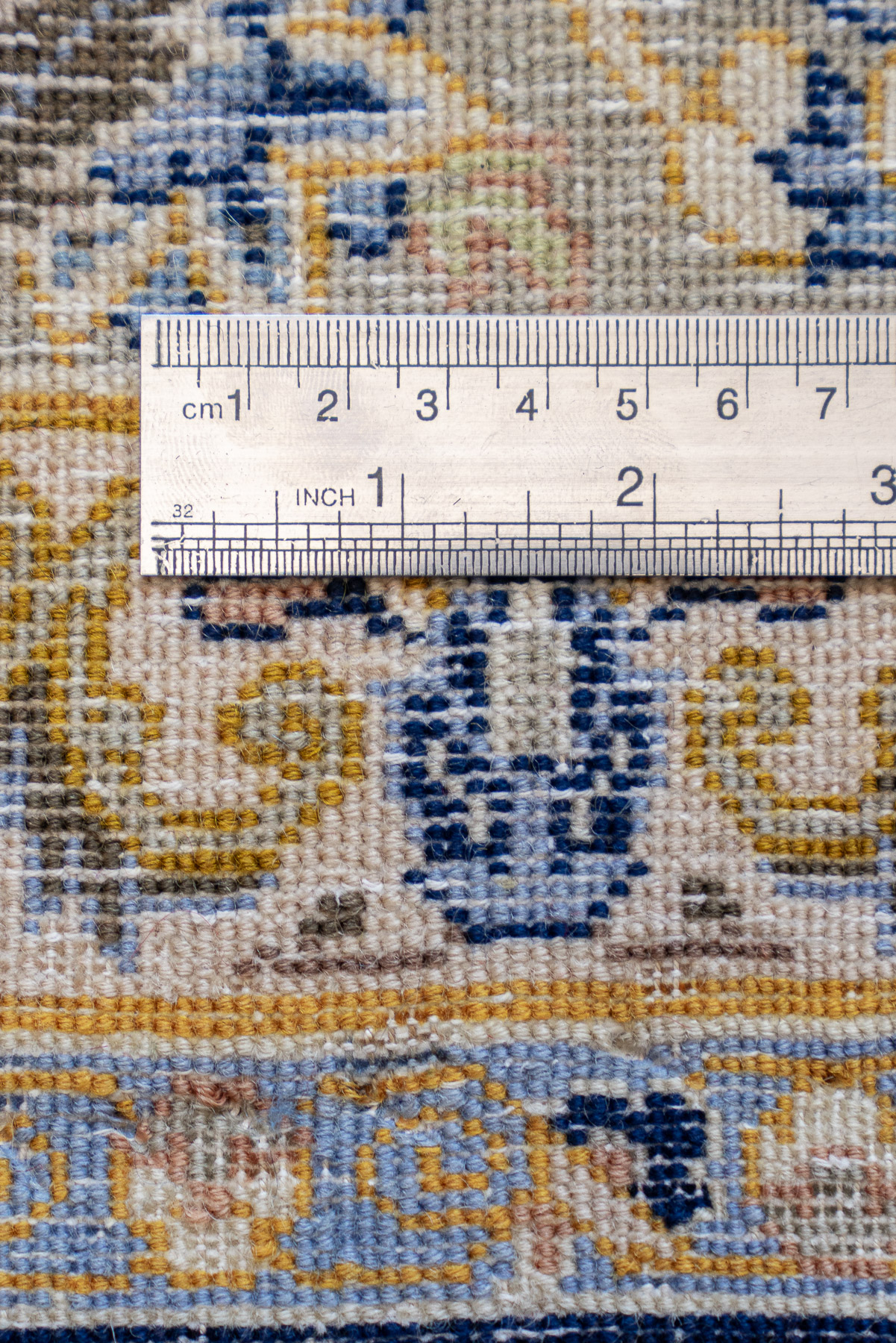
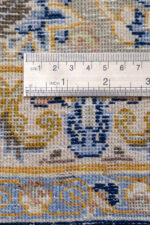
The foundation is silk, and that is what makes a weave this fine possible. Silk warps can be spun thinner and set closer than cotton, so the drawing stays crisp at the smallest scale and the rug lies flat and supple. Silk foundations were reserved for the best Isfahan workshop weaving, and the fringes are the silk warps themselves.

The colours are natural dyes, and the rug carries the abrash that comes with them, the shifts of shade that appear where the weavers moved on to a new hand-dyed batch of yarn. Partway along its length the sage border warms to olive and the palmettes in it turn from slate to rust, and the corner spandrels and the ivory field change with them, all at the same point across the full width. Around those shifts the palette is the cool, light one that mid-century Isfahan made its own: ivory and sage, powder blue and navy, and a clear saffron that carries the outlines.

The pile is full and even across the whole rug, and the ends have been resecured.

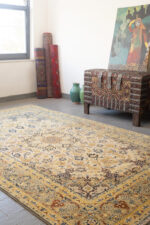
At 325 by 198cm it suits a living room, dining room or bedroom. View it in our Richmond gallery, or explore more vintage Persian rugs.

Additional information

CraftCarpet
OriginIsfahan
ProvenanceMid 20th Century
MaterialityWool on Silk
Area6.45
Dimensions325 × 198 cm
Weight19.50 kg

$18,990

$18,990

In stock

Available in Showroom

SKU: RCA442

FAQ

Dyad Artisans uses  Australia post as the main courier service to ship our products, both locally and internationally.

Shipping costs are influenced by the size and weight of the product and your location, you will be advised all shipping charges in the shopping cart and will be added to the order total before checkout. 

Courier services used by Dyad Artisans are registered, with a unique tracking number advised as soon as we dispatch to you. Where we use specialist courier services we will email you with those details directly. 

Packing and delivery – Orders are normally dispatched within 2-3 business days and shipping times are estimated at between 3-7 business days depending on your location within Australia.

Tracking Your Order – Once you have placed your order you will be sent a confirmation email that your order has been received by Dyad Artisans. You will receive another email once your order has been shipped – and this will include a unique tracking number.

It’s Ok to change your mind!

In short we offer 14 day change of mind refund but please read our full exchange policy, click here.

Dyad Artisans is not an ordinary rug store but a retailer that specialises in Persian hand-weaves whose products are handpicked and curated by its experts and Dyad founder himself from well-known workshops all over Iran and without any middlemen. This way of purveying and commissioning allows us to be sure of the authenticity of all our products and also helps us to keep the prices as low as possible for the well-being of our customers.

Another noteworthy point is that all of our carpets have a Certificate of Origin and genuinity, which is attached at the back of the carpets. These cards contain all the required product information, including origin, Provenance, Materiality, Dimensions, Weight, Craft, and area of the carpets. ID Cards also include a QR code through which you can always access the information on your carpet.

You can also read our blog about how to identify handwoven rugs and other related stories here.

Here are some quick tips on how to take care of your rug, but for more detailed information please read through our blog post here.

  • Vacuum regularly (slowly in the direction of the fibres) to extend your rug’s life.
  • Air it out to help prevent moisture buildup.
  • Rotate once a year to distribute wear and fading.
  • Clean spills immediately to minimise damage.
  • Only wash your rug sparingly and use professional handwoven rug washers.
  • If you want to store your rug roll it and lie it flat in a cool, dry area, out of direct sunlight and remember to use pest protection in the area. 

The digital images we display have the most accurate colour possible. However, due to differences in computer monitors, there can be slight variations in colour between the actual product and your screen. If you can calibrate your monitor, you can have the most precise possible colour rendition.

A major appeal of Persian rugs is they are an art form that is beautiful yet robust. It is impossible to predict how long a rug will last, but quality pieces can last for centuries while in use if properly maintained. One of the significant benefits of hand-knotted rugs over machine-made rugs is that the wool does not tend to shed as much as the knots are secure. Depending on the level of traffic, the quality of the rug and the level of care it receives, your rug could last anywhere from 30 to 300 years. Rugs held by collectors and sold for hundreds of thousands or millions can often be several centuries old.

The measurements displayed on the website do not include the fringes. 

Imperfections and minor variations are an inherent and celebrated aspect of Persian carpets, adding to their charm and value. Since these carpets are handwoven, some variations are unavoidable but are actually appreciated for making each carpet unique. In fact, imperfections are particularly common in nomadic carpets, which are woven on more primitive looms in rural areas. It’s worth noting that in some cases, these imperfections are even intentional and known as the “Persian Flaw.” This term represents the idea that only a god can create something perfect and serves as a deliberate nod to the belief that beauty lies in imperfection.

Remember that your carpet is made of natural fibres and should be able to breathe if you need to store it.

There are two golden rules for storing a Persian carpet. For the short term, loosely roll up the carpet and tie a piece of string or rope around it to maintain the shape.

For a long period, wrap it in a moth-proof cotton or linen bedsheet and store it lying down in a cool, dry area, out of direct sunlight. Check the rug every few months.

Related Stories